August 2025 // LEGO // Updated April 2026
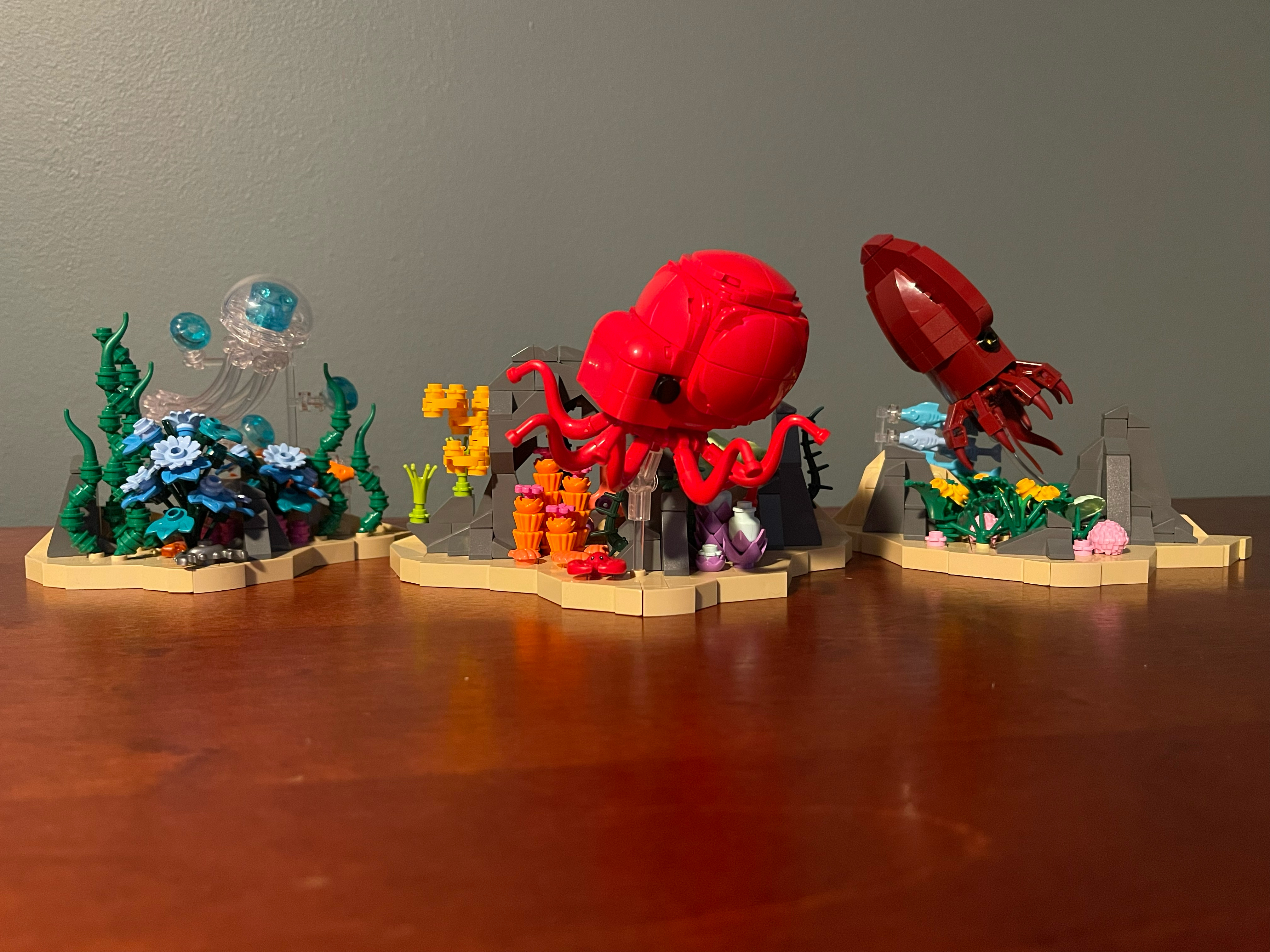
This model is one of two display pieces I created as part of The LEGO Group's assignment for the Design Talent Pool. I chose an underwater theme, drawing on my fascination with ocean life to develop a set concept aimed at adults. While LEGO has produced many adult display models, from large-scale licensed themes like the Star Wars™ UCS line and Marvel modulars, to architectural landmarks such as the Colosseum (10276) and Eiffel Tower (10307). I felt that natural history remains a largely untapped subject. Recent sets like the Ideas Insect Collection (21342), Creator 3-in-1 Red Fox (31154), and Kingfisher Bird (10331) show how compelling display pieces rooted in nature can be, and this project aims to build on that direction.
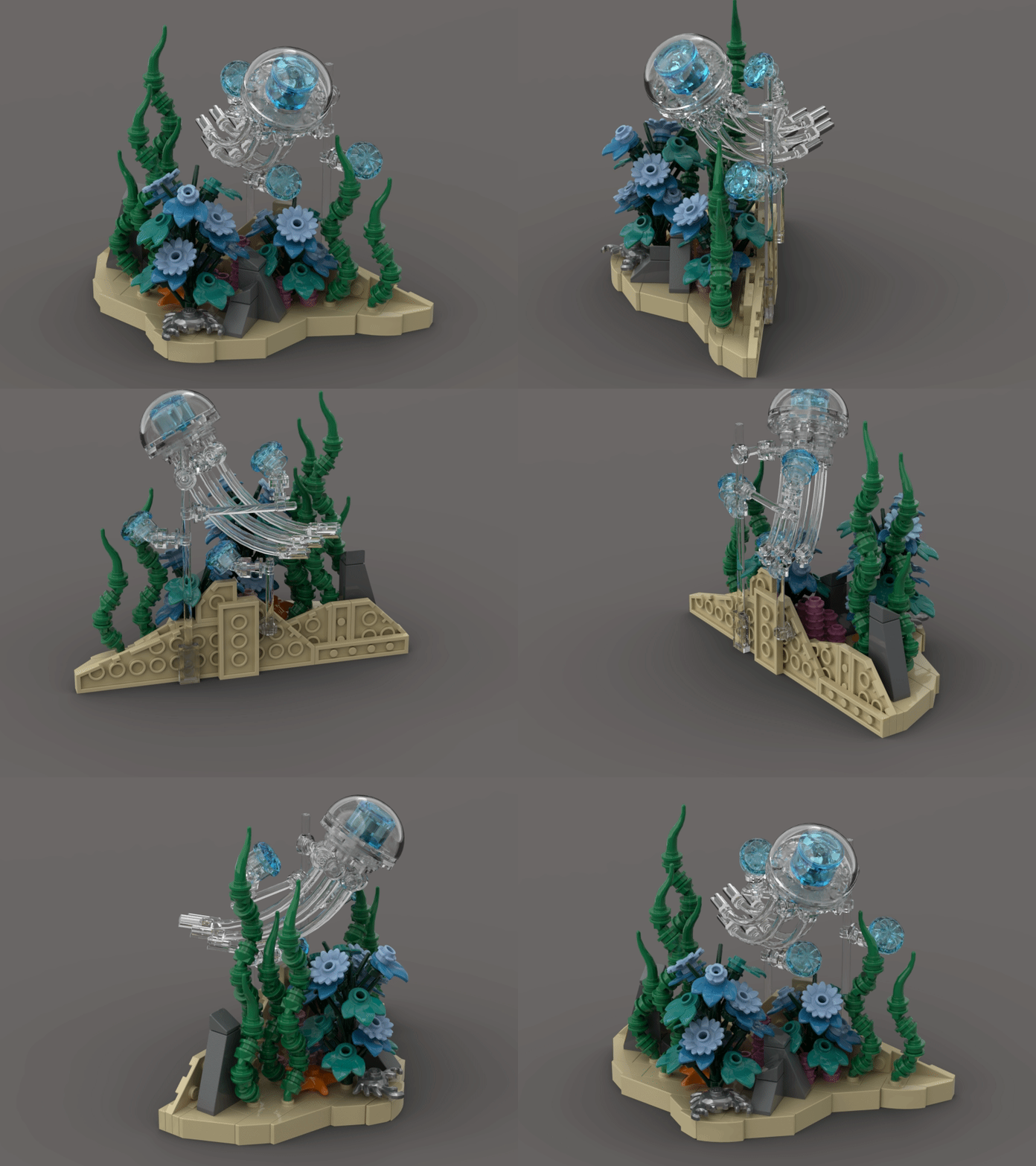
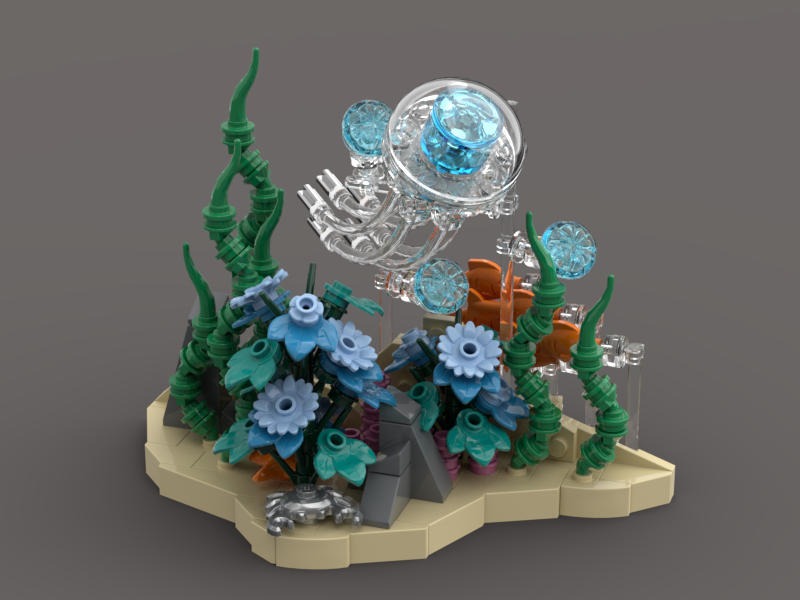
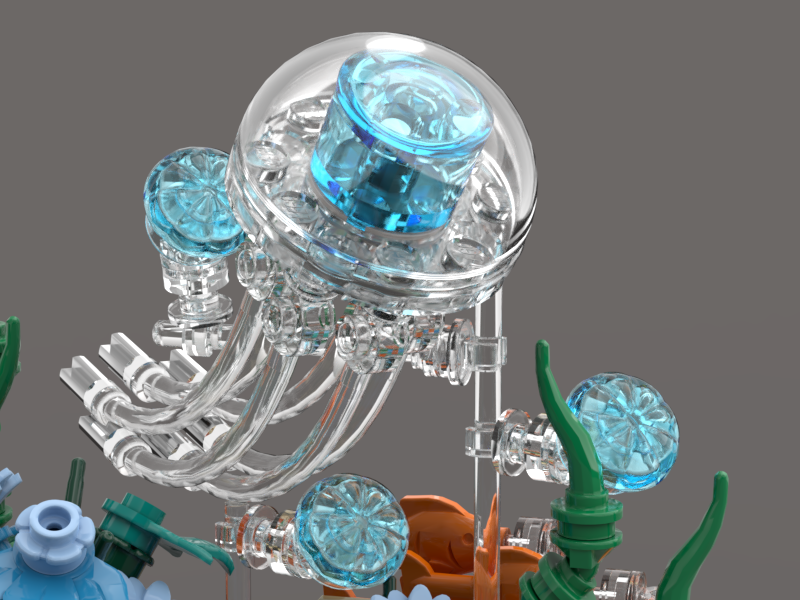
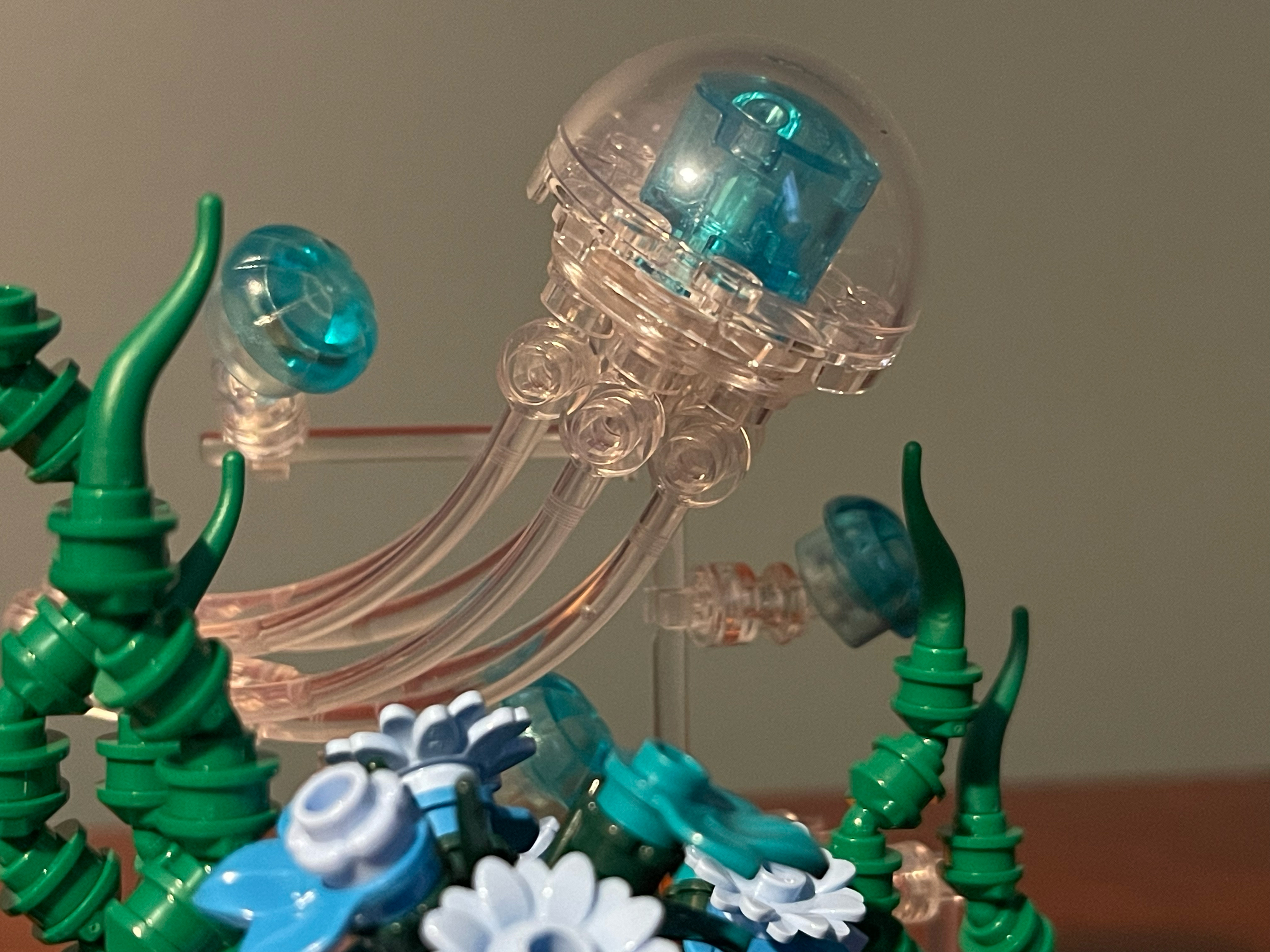
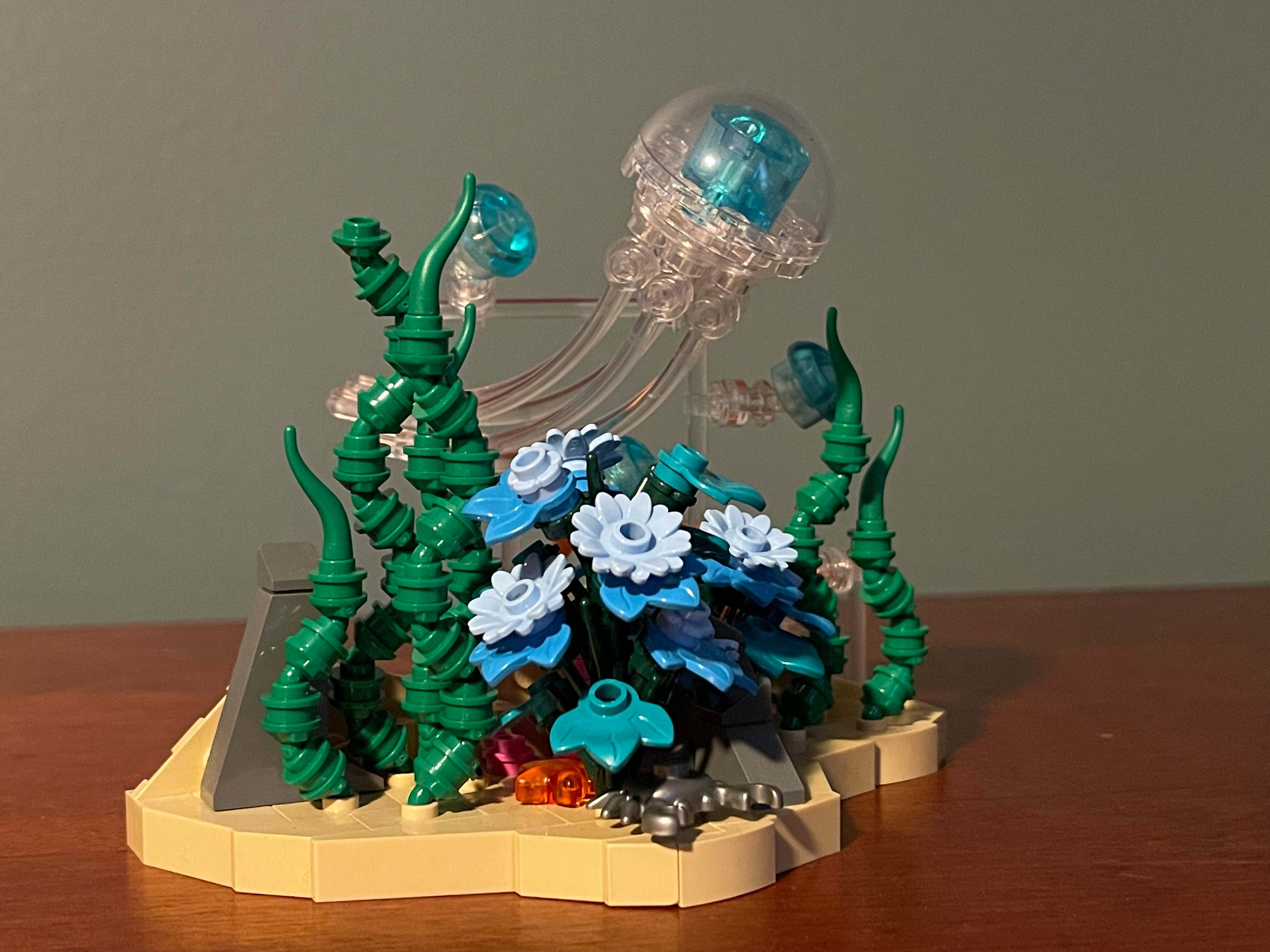
The jellyfish was the first of the three creatures I designed. Inspired by a jellyfish model by Thomas Jenkins, my version uses curved bar elements to form the tentacles. To create a stable and legal build for the body, I developed my own structural solution using transparent wheel elements, bricks with axle holes, and a Technic axle to suspend a clear circular plate, resulting in a design that's both sturdy and delicate.
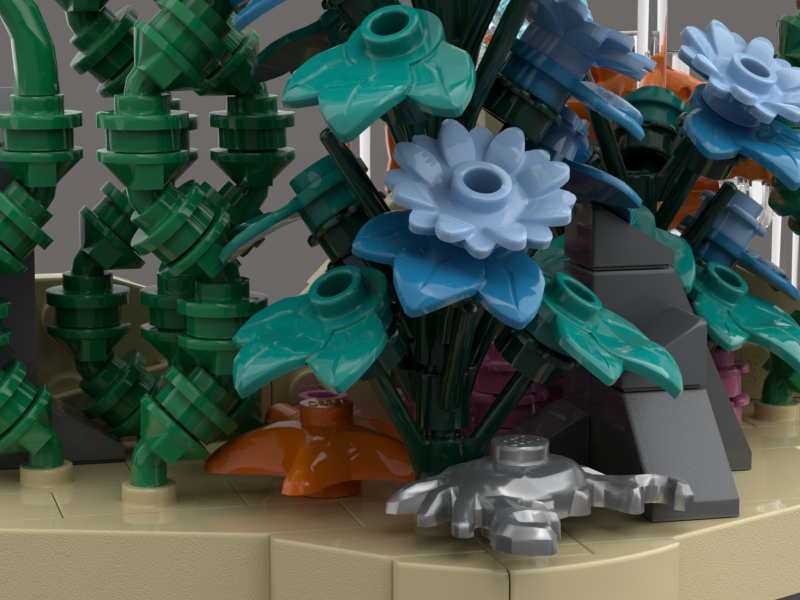
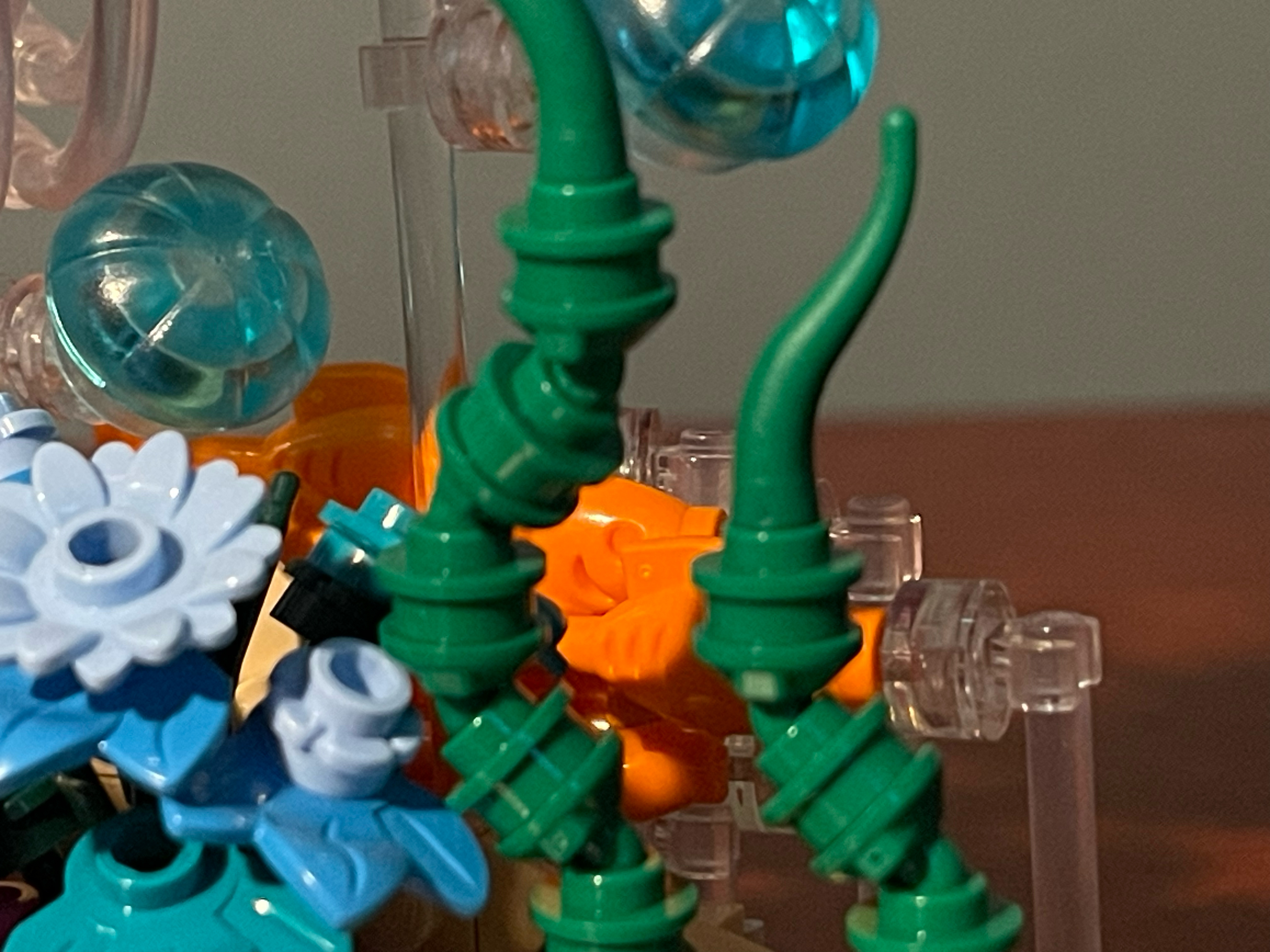
For this updated version, I expanded the surrounding ocean flora to play a much larger role in the composition. I strengthened and refined the seaweed using green 1x1 round plates with bar holes, making them not only more secure but also more organic and lifelike. The jellyfish's "brain" was redesigned in transparent blue, with fewer parts and a cleaner silhouette. I also added several smaller jellyfish to bring more motion and depth to the scene.
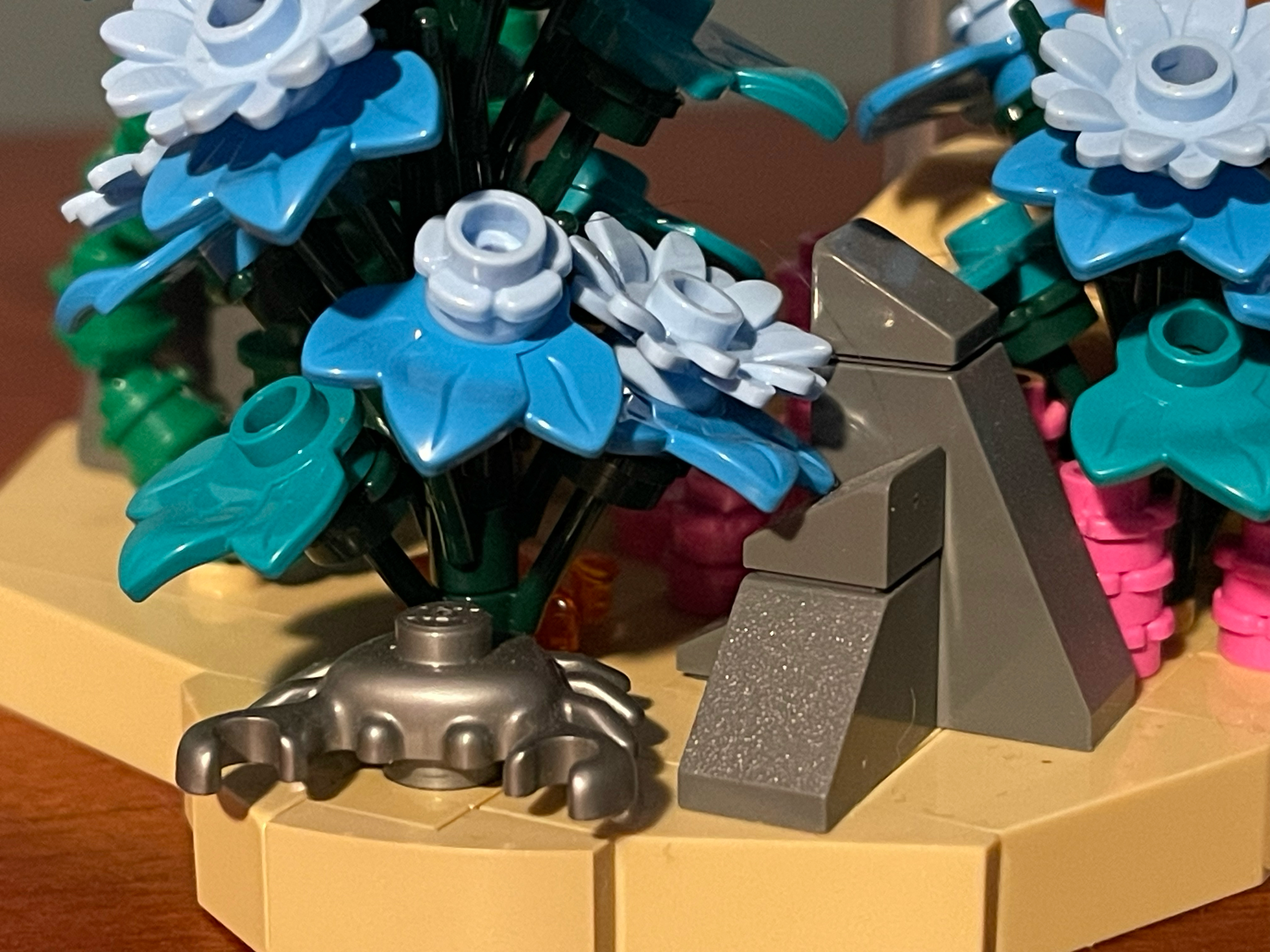
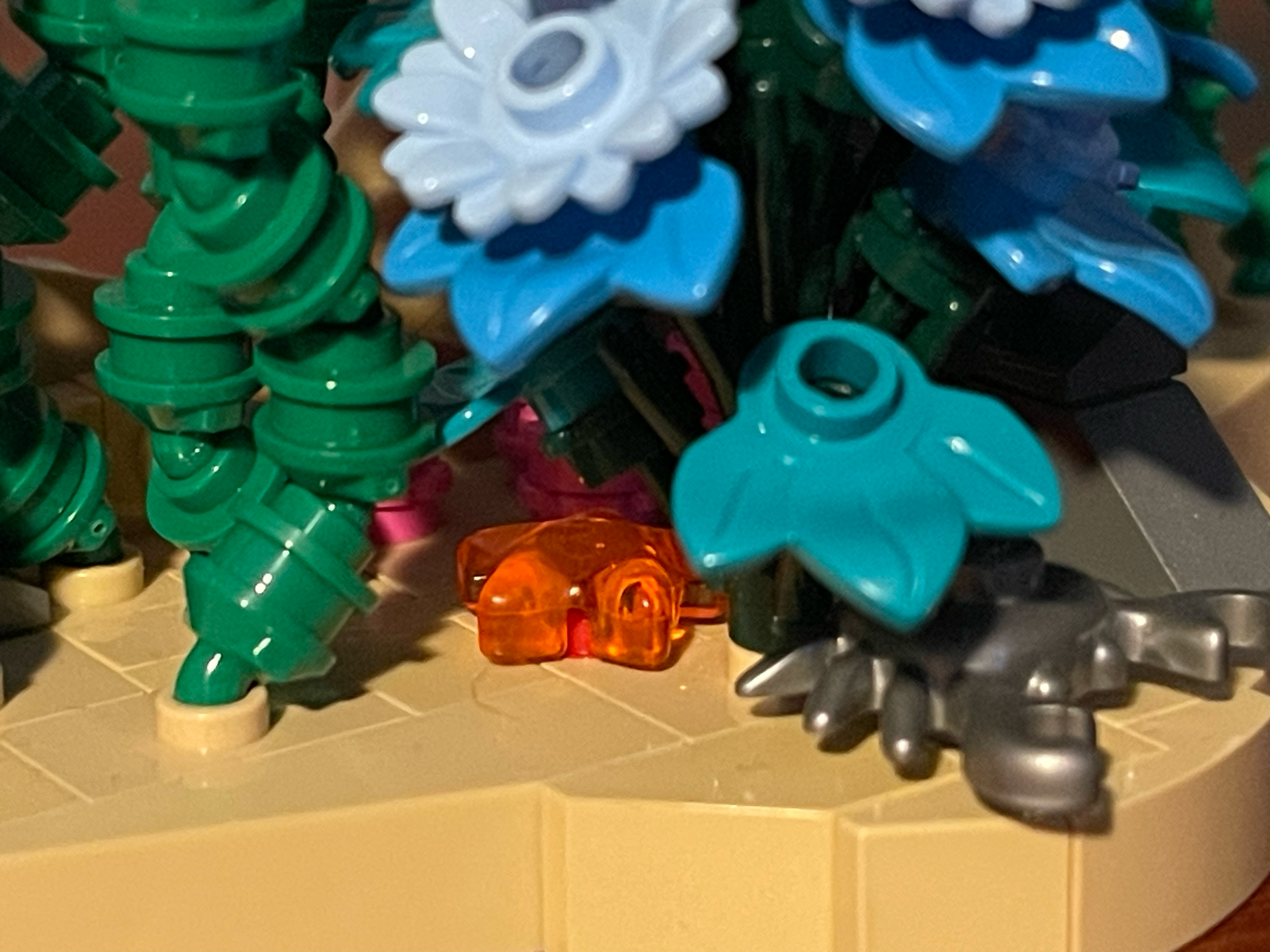
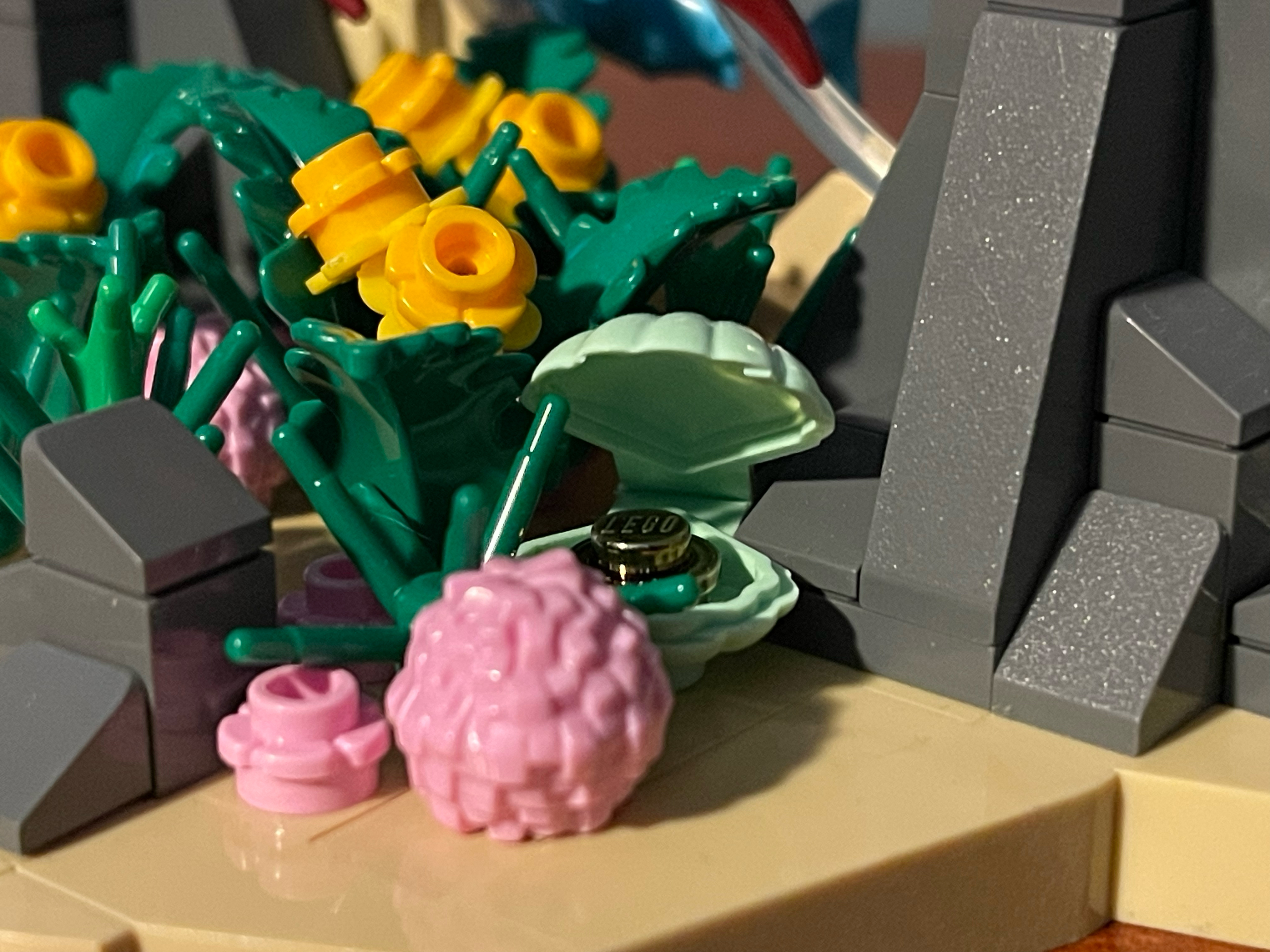
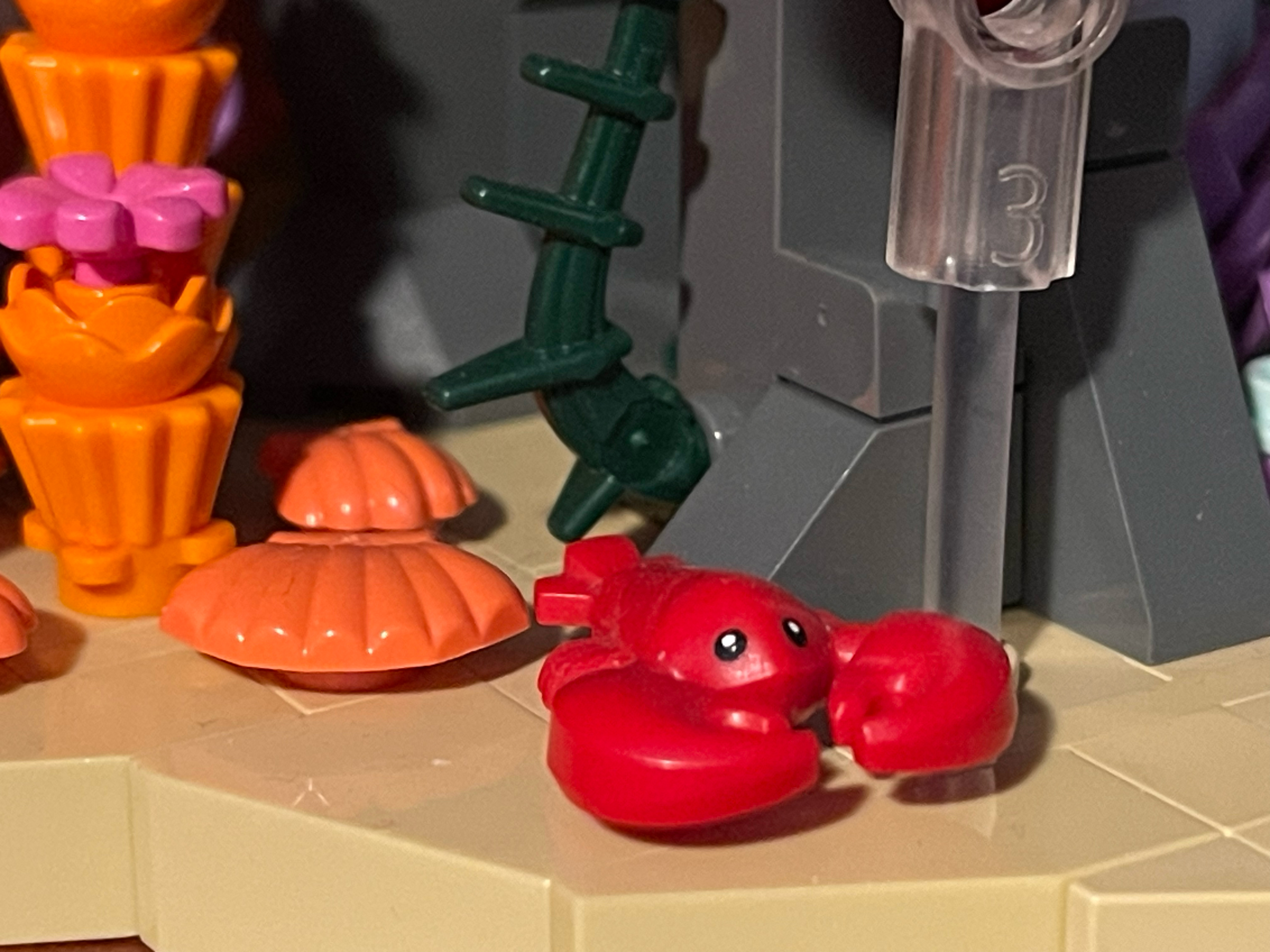
The crab was recolored to better blend into its surroundings, giving it a camouflaged, natural look. For contrast, I included a bright starfish as a somewhat hidden detail. Originally, I wanted to try experimenting with Clikits pieces, though they aren't available in Studio. I ended up purchasing set 7558: Shells and Starfish to test them in person and ultimately chose the starfish for the final model, which is represented by the normal system style starfish.
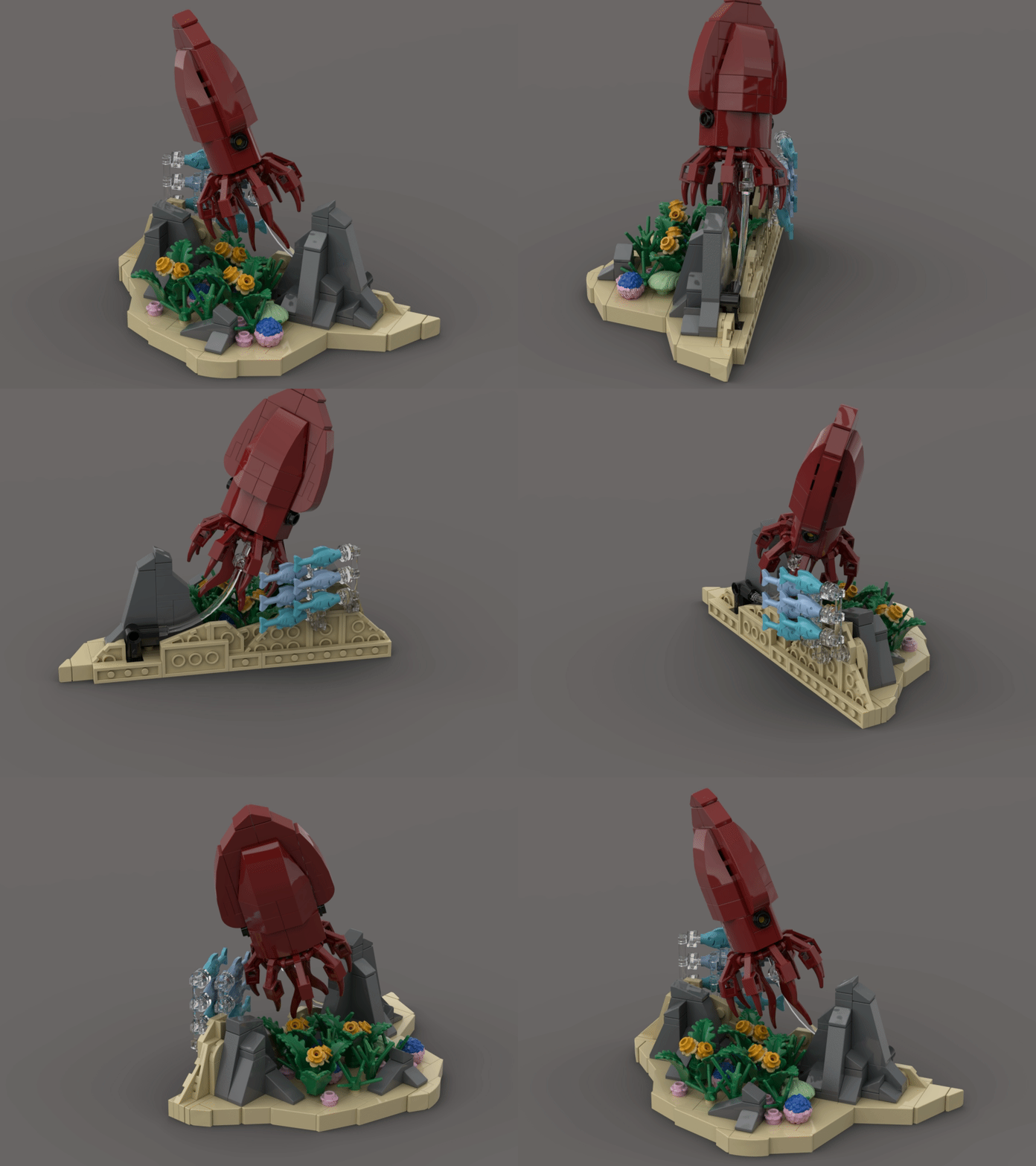
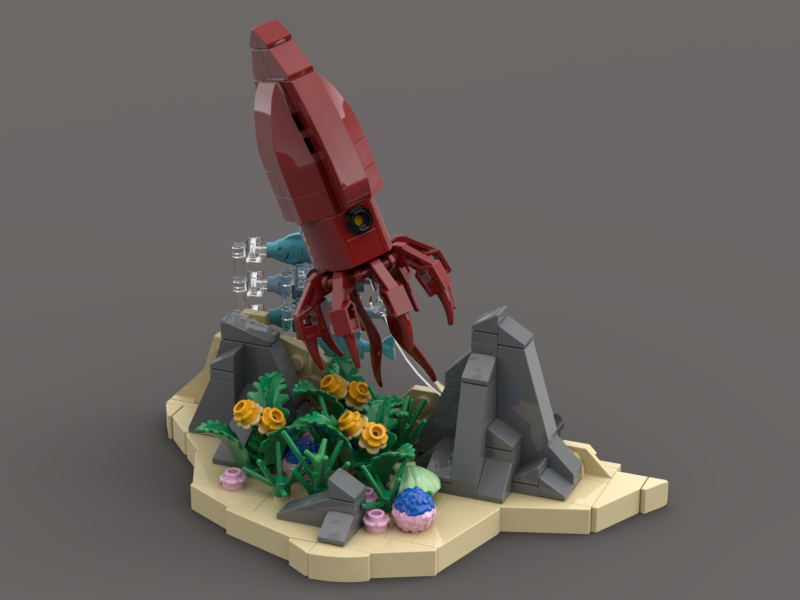
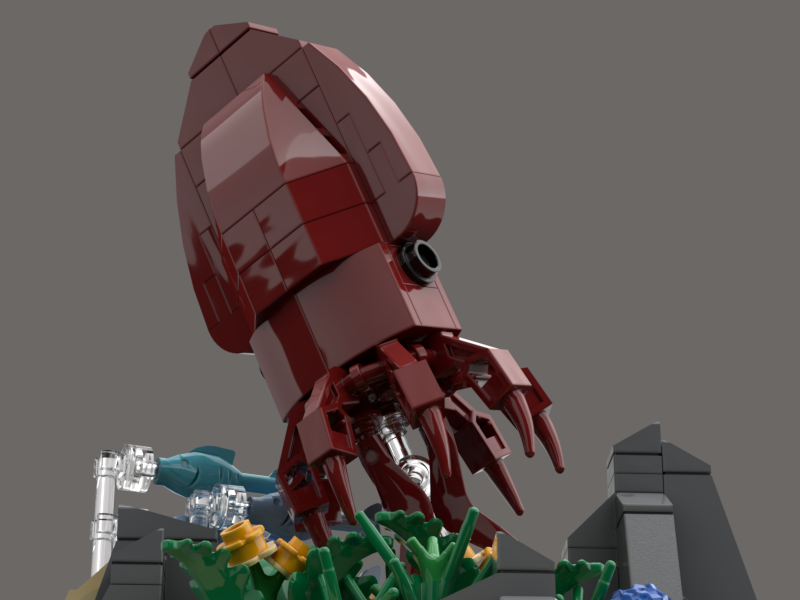
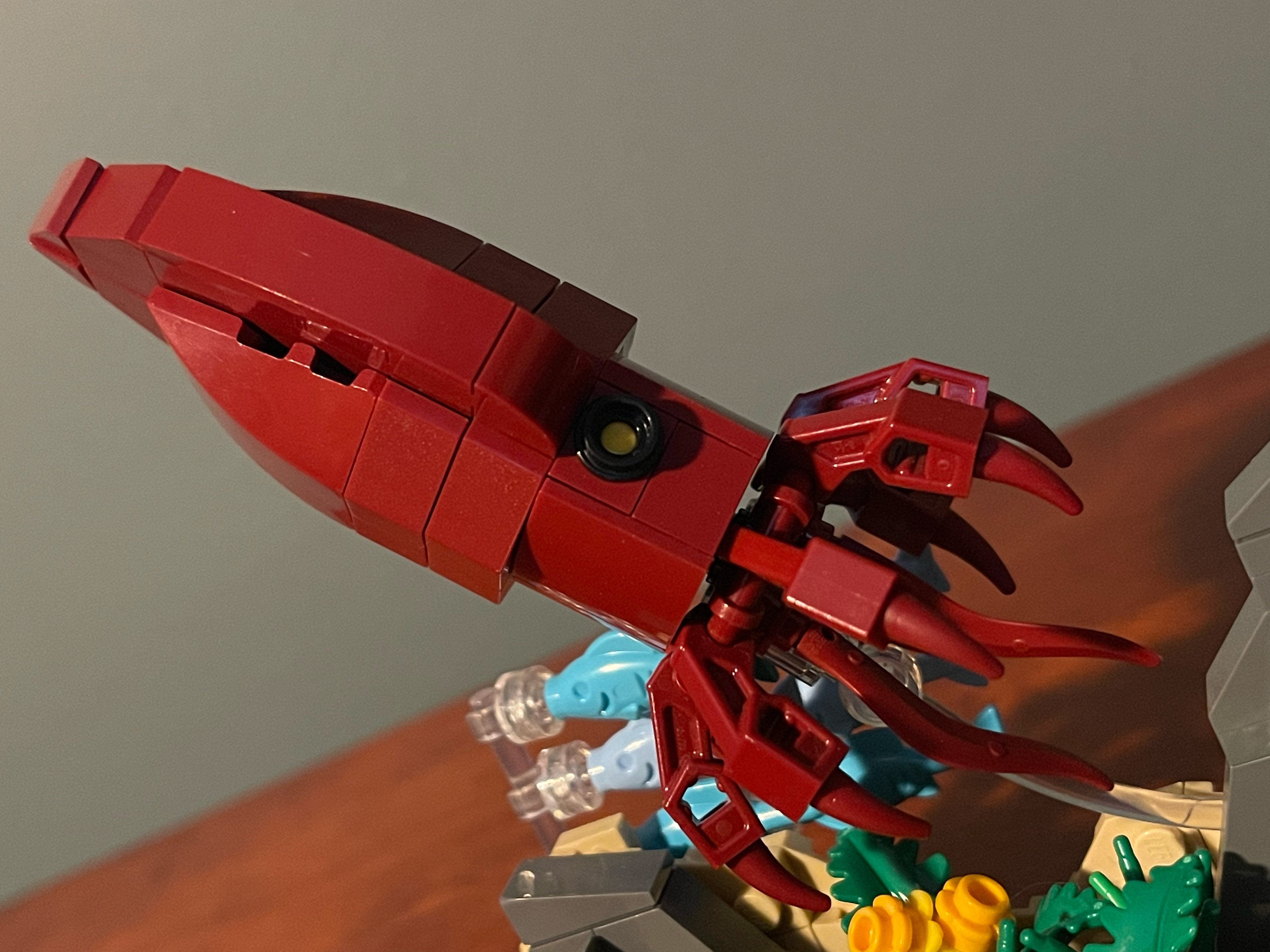
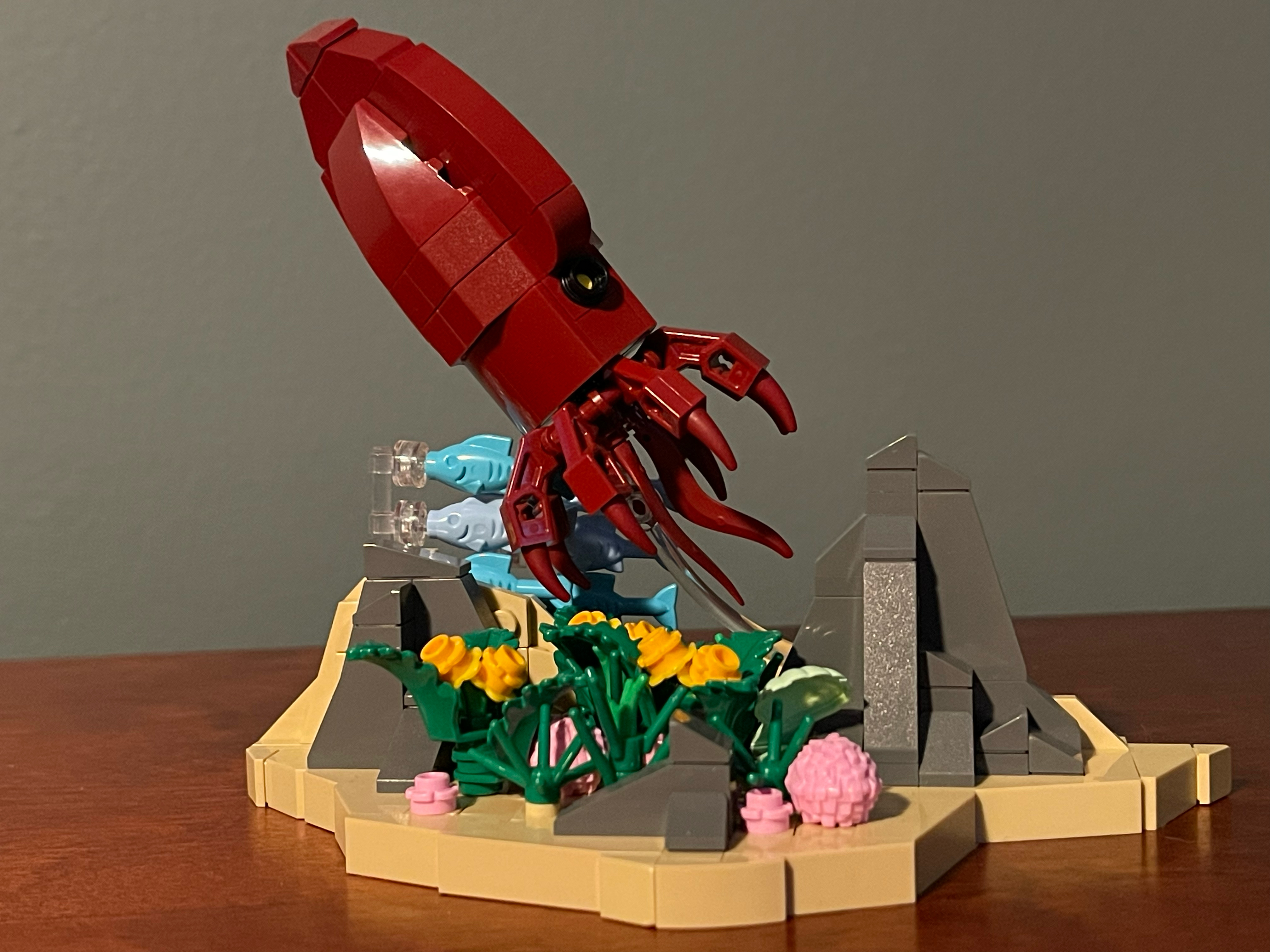
For the squid, I wanted to emphasize the eyes as the focal point. Rather than using a full yellow stud, which felt too harsh, I built the eyes from round plates with bar holes combined with a yellow bar, giving them a more natural, expressive look. The body and tentacles came together through a variety of SNOT techniques, allowing for smooth shaping and clean transitions between sections.
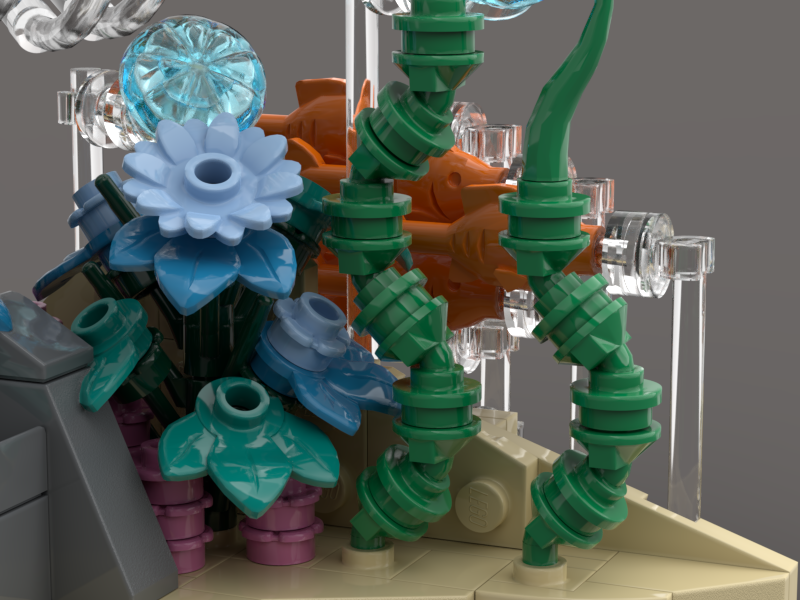
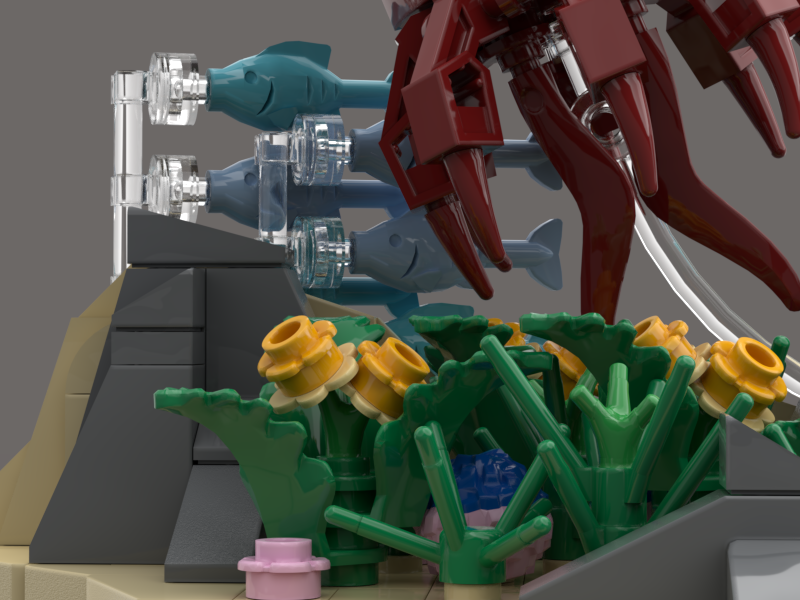
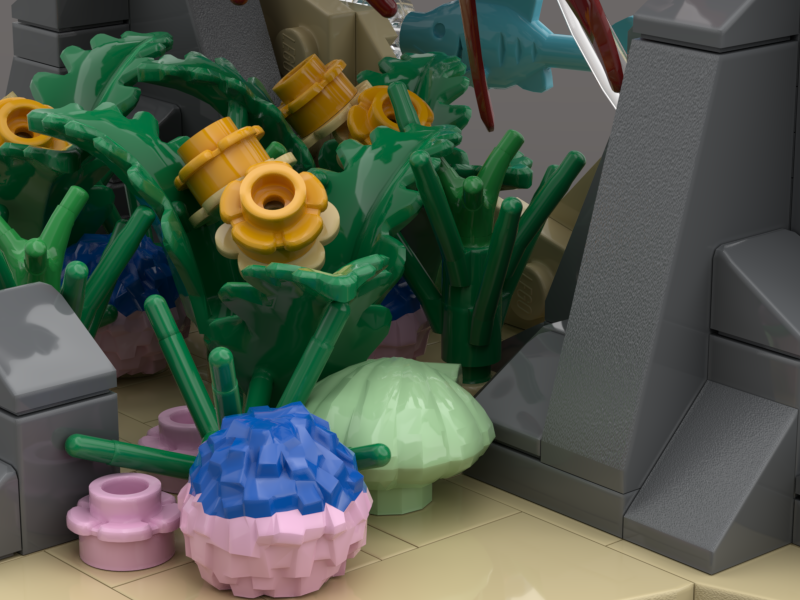
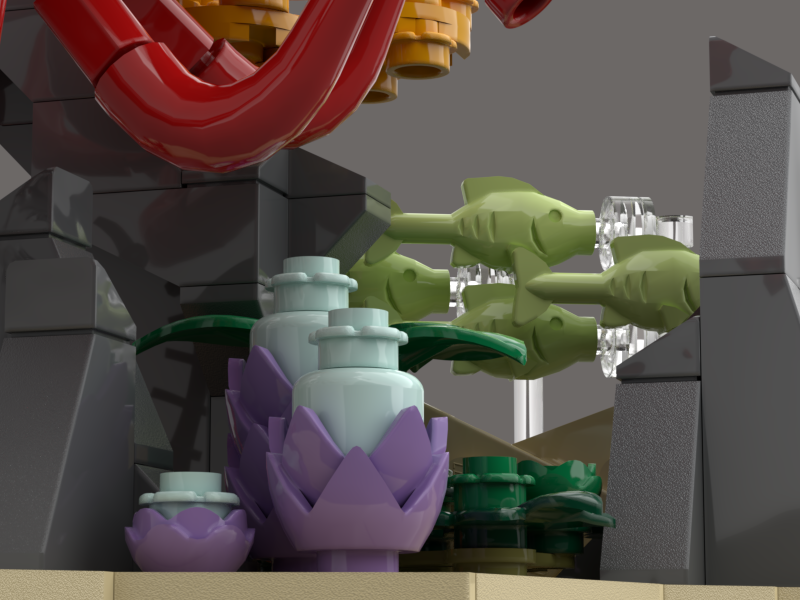
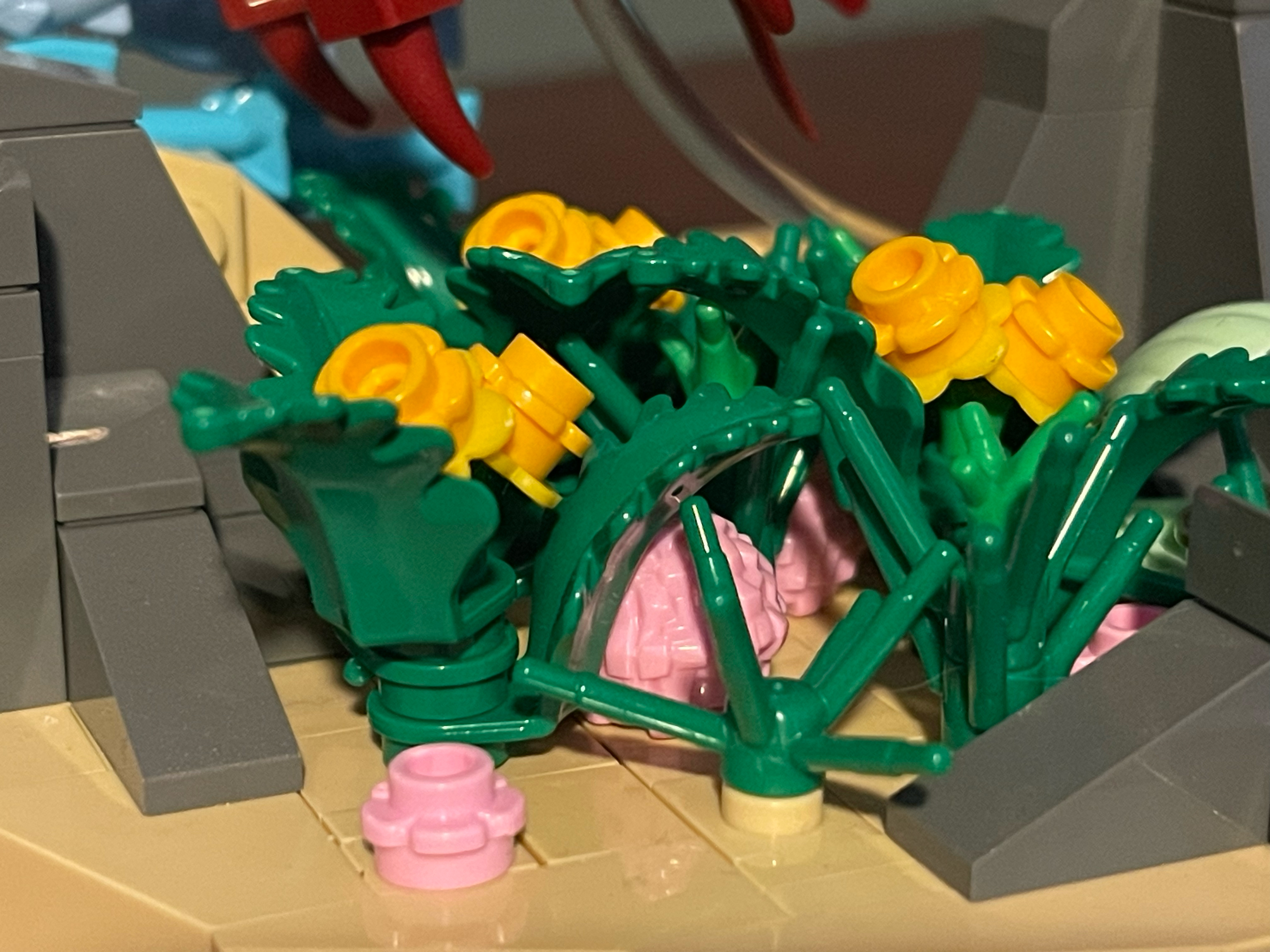
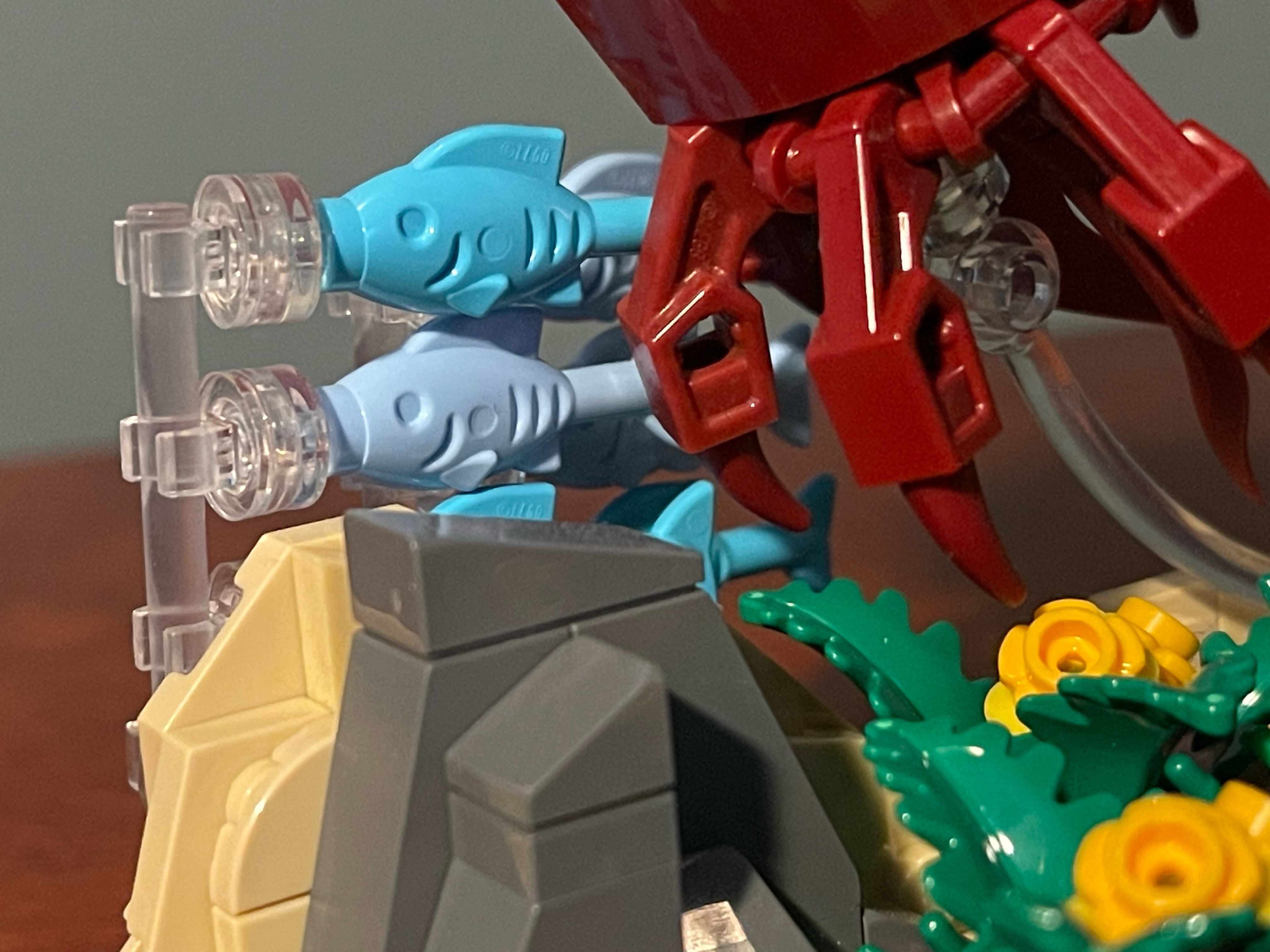
In this updated version, I reinforced the internal structure - an invisible change from the outside, but one that fixes a stability issue that appeared when the original model was physically built. I also adjusted the color of the fish to better complement the surrounding environment and added new plant life using pom-pom elements. (In Studio, these pieces only appear as printed versions and don't display in solid bright pink, even though that color exists in real bricks, which makes them look a little odd in renders.)
Overall, this was the model I changed the least, since I was already happy with its form and proportions. Most of my updates focused on improving the foreground composition, filling in some of the empty space to create a fuller, more cohesive scene.
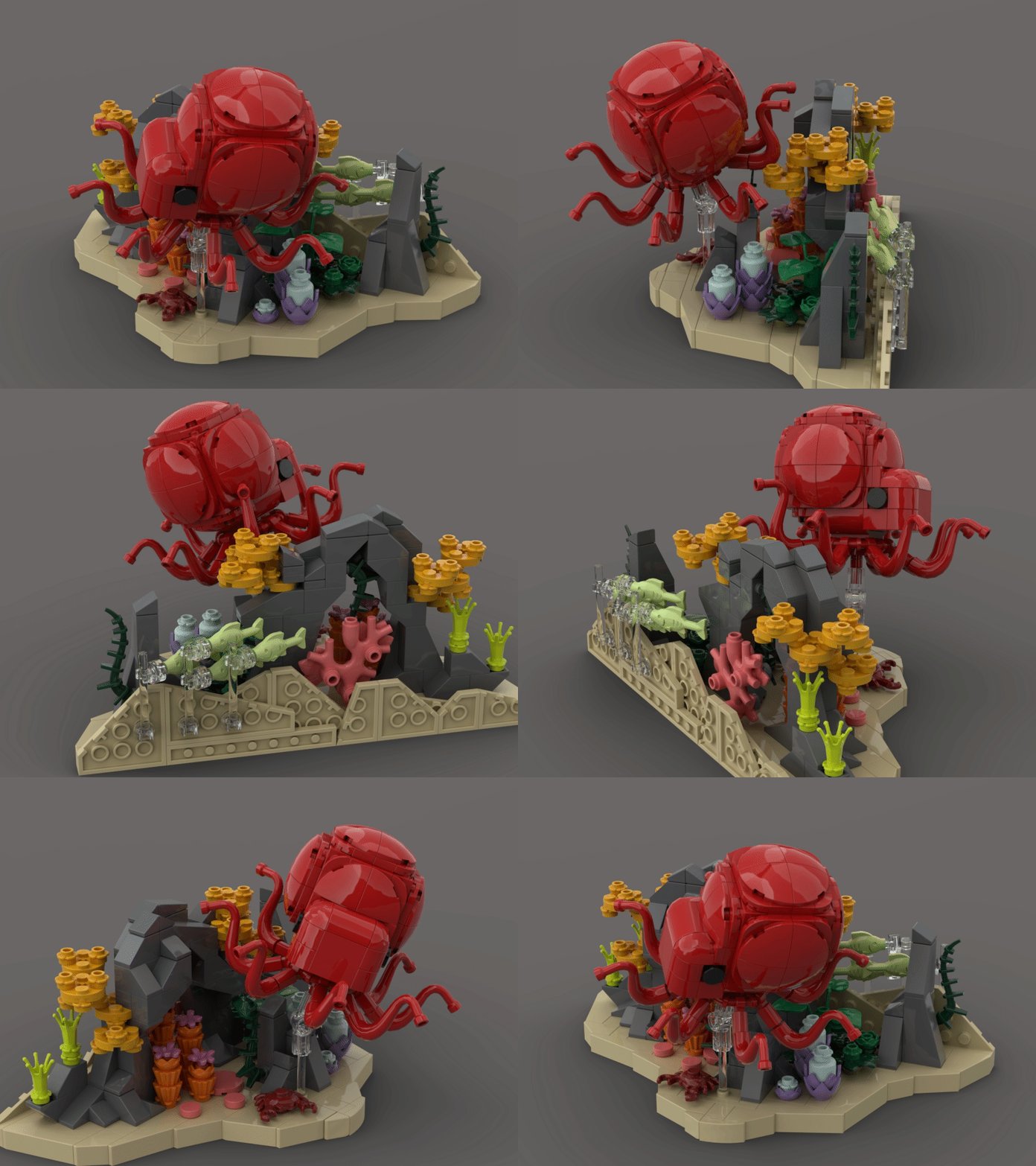
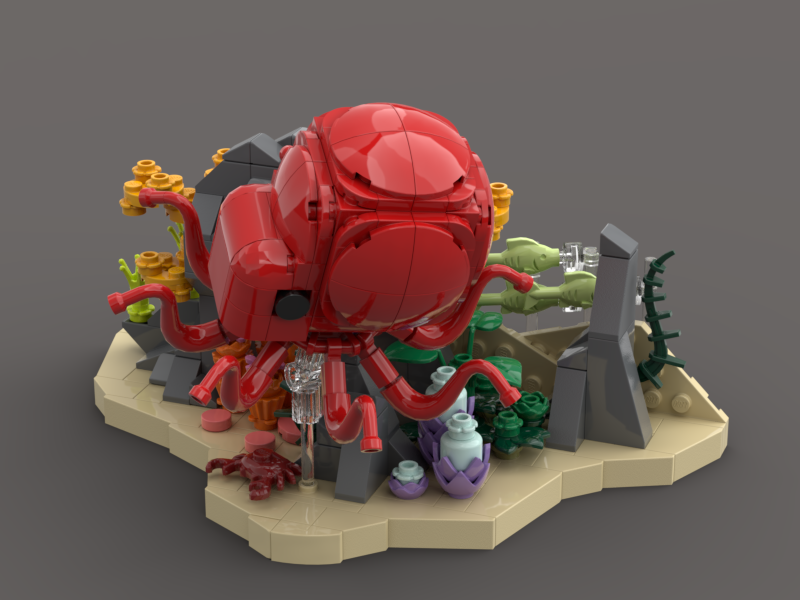
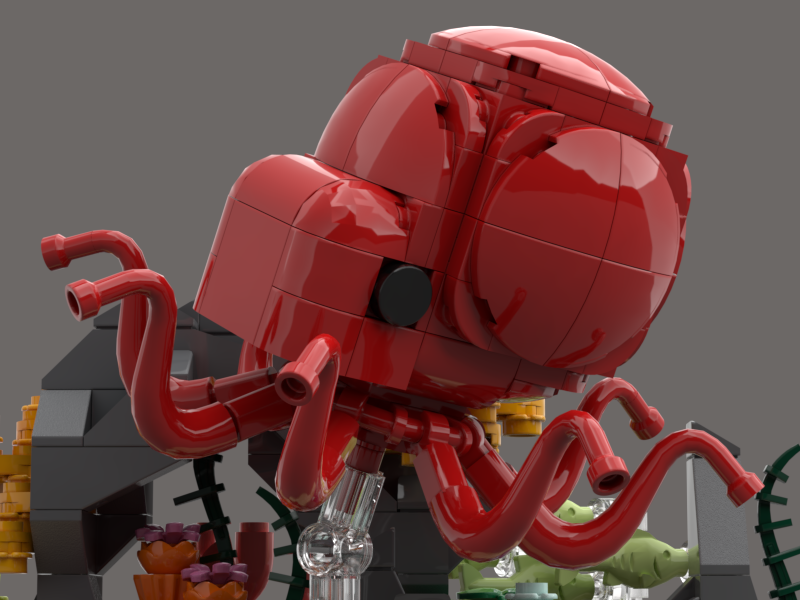
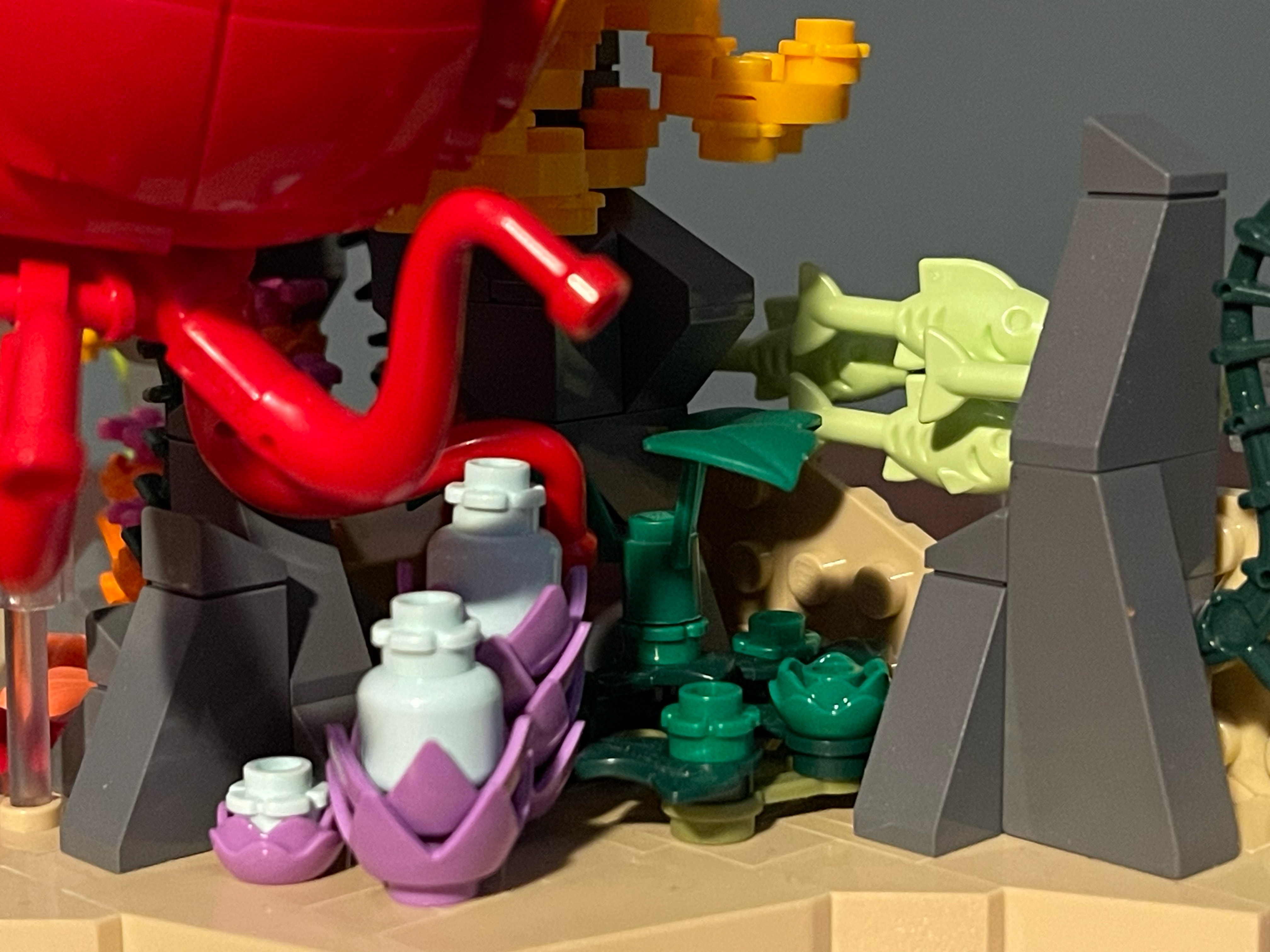
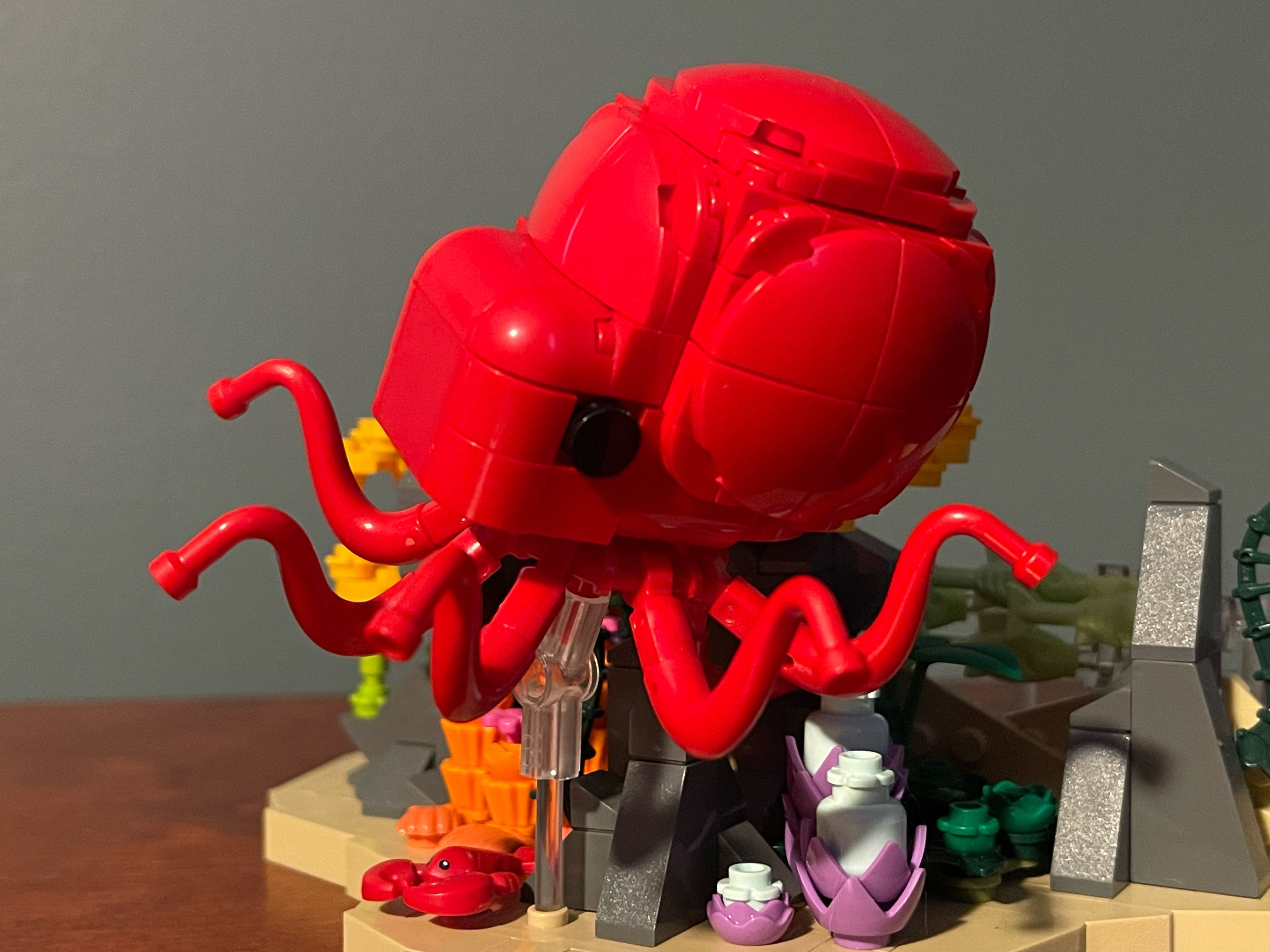
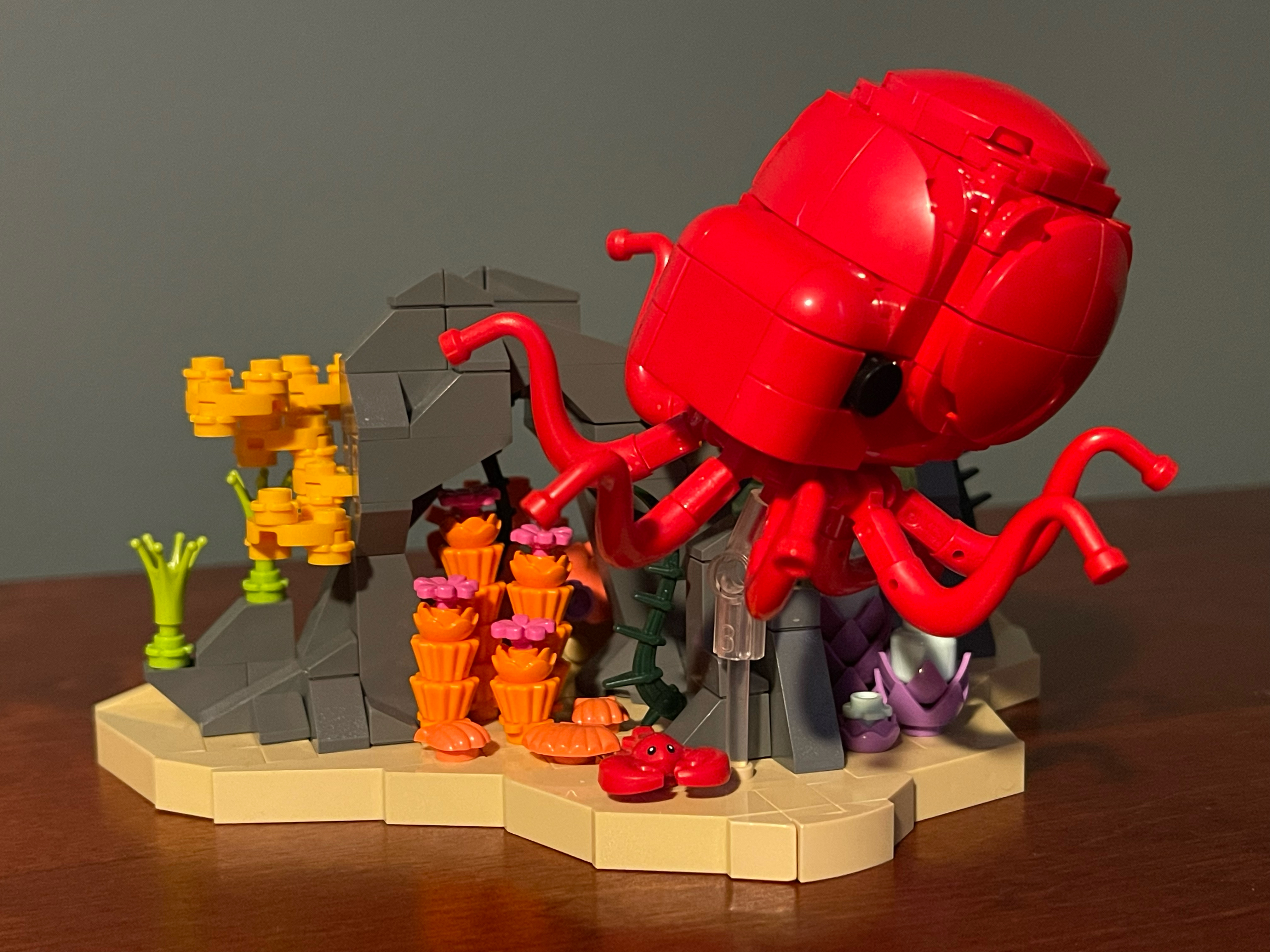
The octopus began with its tentacles, which I first explored in bright orange before switching to red due to part limitations. The design relies heavily on the 2x2 octagonal bar element to achieve flexible, flowing arms - a piece that, in red, only appeared in one set (6250 Cross Bone Clipper, released in 1997). Realizing how rare and expensive it was almost made me reconsider using it, but it was absolutely worth it for the final model.
The body required extensive curved slopes and clever orientation techniques, including inverted sections that allowed studs in multiple directions. The result is a rounded, organic form that captures the creature's natural motion. I also redesigned the display stand, as the original version couldn't support the model's weight. The new version is stronger, more balanced, and easier to pose.
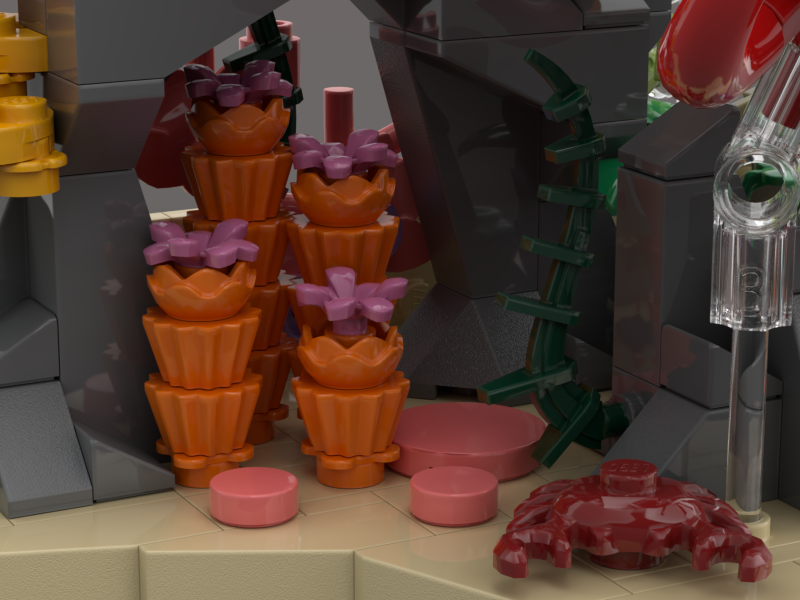
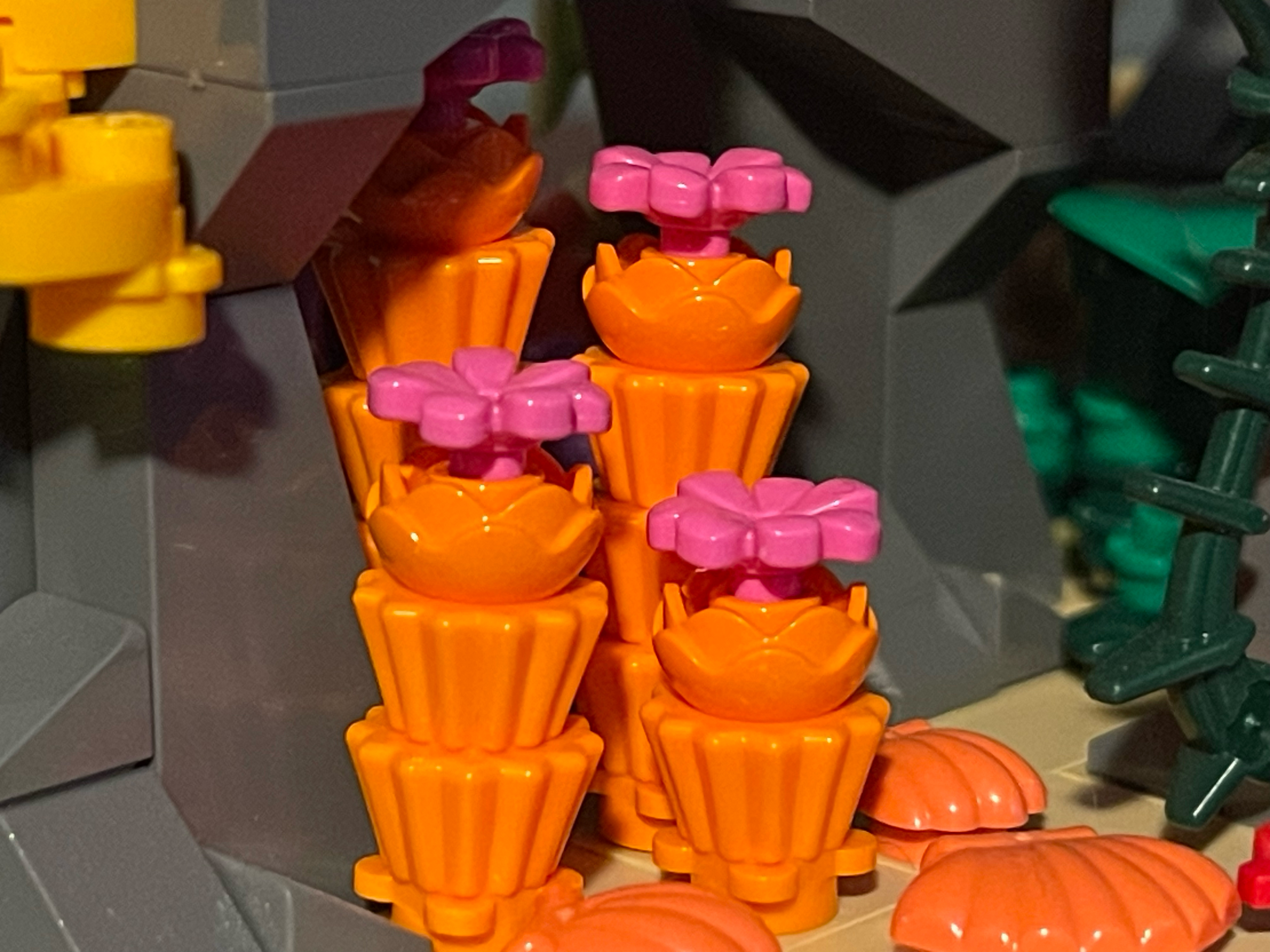
For the environment, I rebuilt the bright orange sections on the sides of the cave to ensure they connected properly, since the original assembly using 2x2 round plates didn't connect corner to corner due to not having full studs to make stacking them look cleaner. In front of the cave, I reworked the orange coral structures, adding a small piece at the base to make them actually connect. I also topped them with magenta flowers to introduce an extra pop of color, and added a few scattered shells across the ocean floor to bring more detail and texture to the scene.
Alternate colors of the Octopus are available!
Each display base is filled with colorful aquatic flora built from unconventional LEGO parts, giving every scene its own texture and rhythm. Experimenting with these organic elements offered a refreshing contrast to the more structured builds I usually create, such as my custom Minecraft or BrickHeadz models. This project let me explore shape, color, and composition in a more spontaneous, natural way.
After submitting the final versions to LEGO, I continued refining the models beyond the 800-piece limit, which ultimately strengthened them. Every extra detail - whether a new plant, creature, or structural tweak - added to the visual depth and storytelling of each scene. Building them physically also revealed areas for improvement: the octopus, for instance, needed a sturdier stand, and some coral assemblies had to be reworked for proper stability.
Though sourcing rare parts can be challenging, assembling the models in real bricks is essential to the process. It's what ensures each build feels authentic, both in design and in function, and remains faithful to the creative intent I set out with from the start.
Coincidentally, I later discovered LEGO Creator 3-in-1 Sea Animals (31158), which also features a sideways base construction similar to mine. While unintentional, that overlap reinforces how much potential this kind of natural display model holds as a concept for future sets.