February 2026 // LEGO // Film
When I first saw the January 2026 LEGO Minecraft wave leak, one set immediately stood out to me: 21587 Zombie Dungeon. I'm not sure if I would call it a direct remake, but it definitely feels like a spiritual successor to 21119 Zombie Dungeon. Something about both of these sets really resonates with me. I think it's because they're purely terrain builds, not a player base or mob house, but something that feels like natural world generation straight from the game.
Since my upscale of LEGO Minecraft 21241 Bee Cottage, I haven't done another full set remake. While I was happy with that model at the time, I now find parts of it lacking, and is something I'm currently working to improve. After hearing feedback from the LEGO Group about my models lacking play features, I started thinking more critically about how I approach design. I primarily build for display, but I want to diversify, learn new techniques, and continue improving my work. I originally considered updating the Bee Cottage to focus more on play, but its only real feature is bees spinning around a tree. With the Zombie Dungeon, I saw a better opportunity. I want to incorporate meaningful play features without sacrificing display quality. I strongly believe both can coexist.
Before even creating this model, I had already planned out what play features I wanted to include.
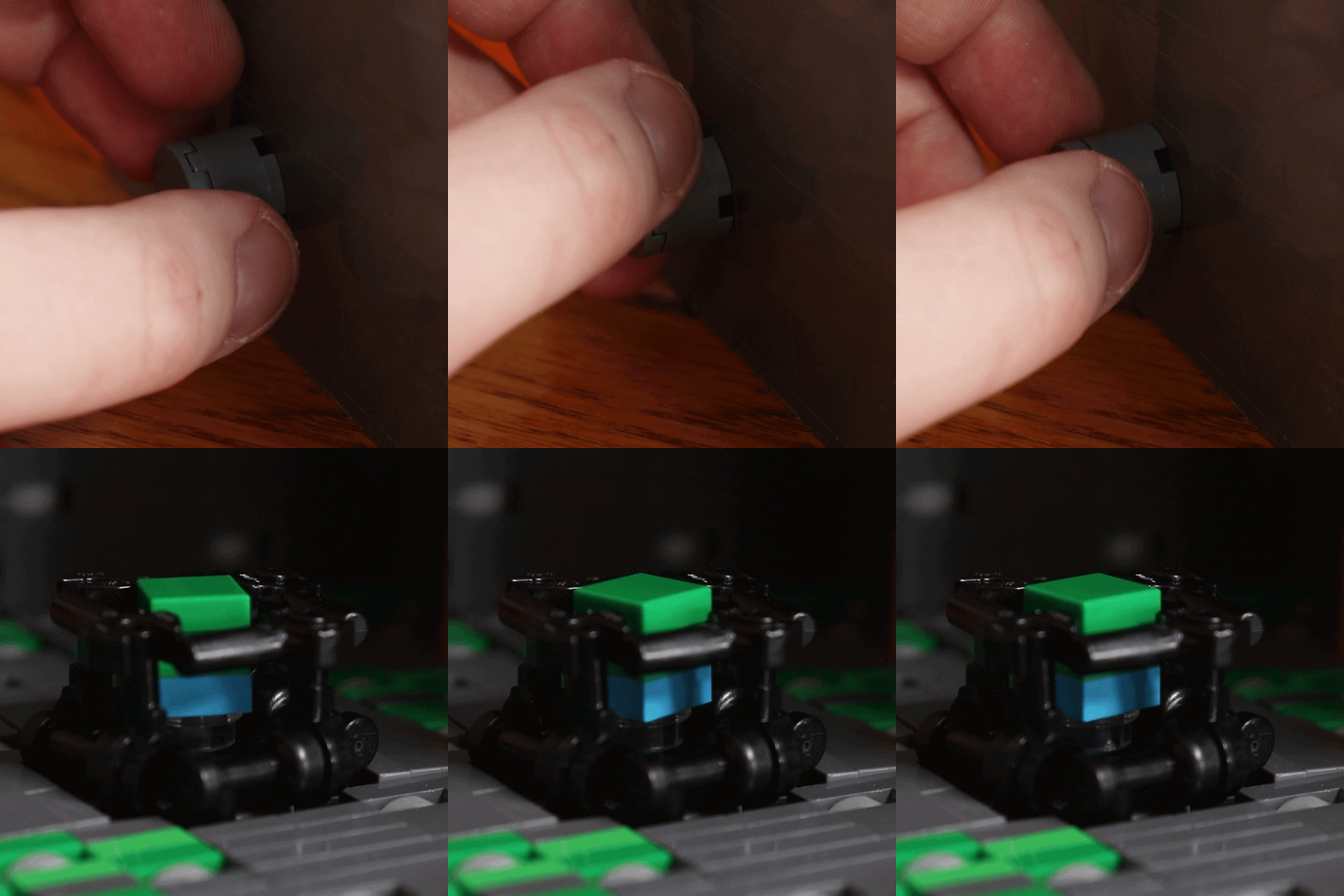
In the original Zombie Dungeon set, the micro-mob inside the spawner could spin, something the newer version lacks. Reintroducing that feature was challenging. In the older set, the spawner was massively oversized to accommodate the mechanism, while the newer version is much more accurate to the in-game scale. I've seen a few other fan attempts at creating a spawner design, but most sacrifice the spinning functionality. At one point, I even considered incorporating a light that would activate when the mob spun, but that quickly proved to be unrealistic for this scale.
I liked the falling sand feature in the newer Zombie Dungeon set and felt I could recreate it in a less visually obstructive way. The mechanism itself is fairly simple: tiles are sandwiched between plates to allow controlled sliding, with internal stoppers preventing them from fully detaching. My only gripe is that when the sand blocks fall, they end up two plates short of a perfect cube. However, that compromise was necessary to maintain both functionality and display accuracy.
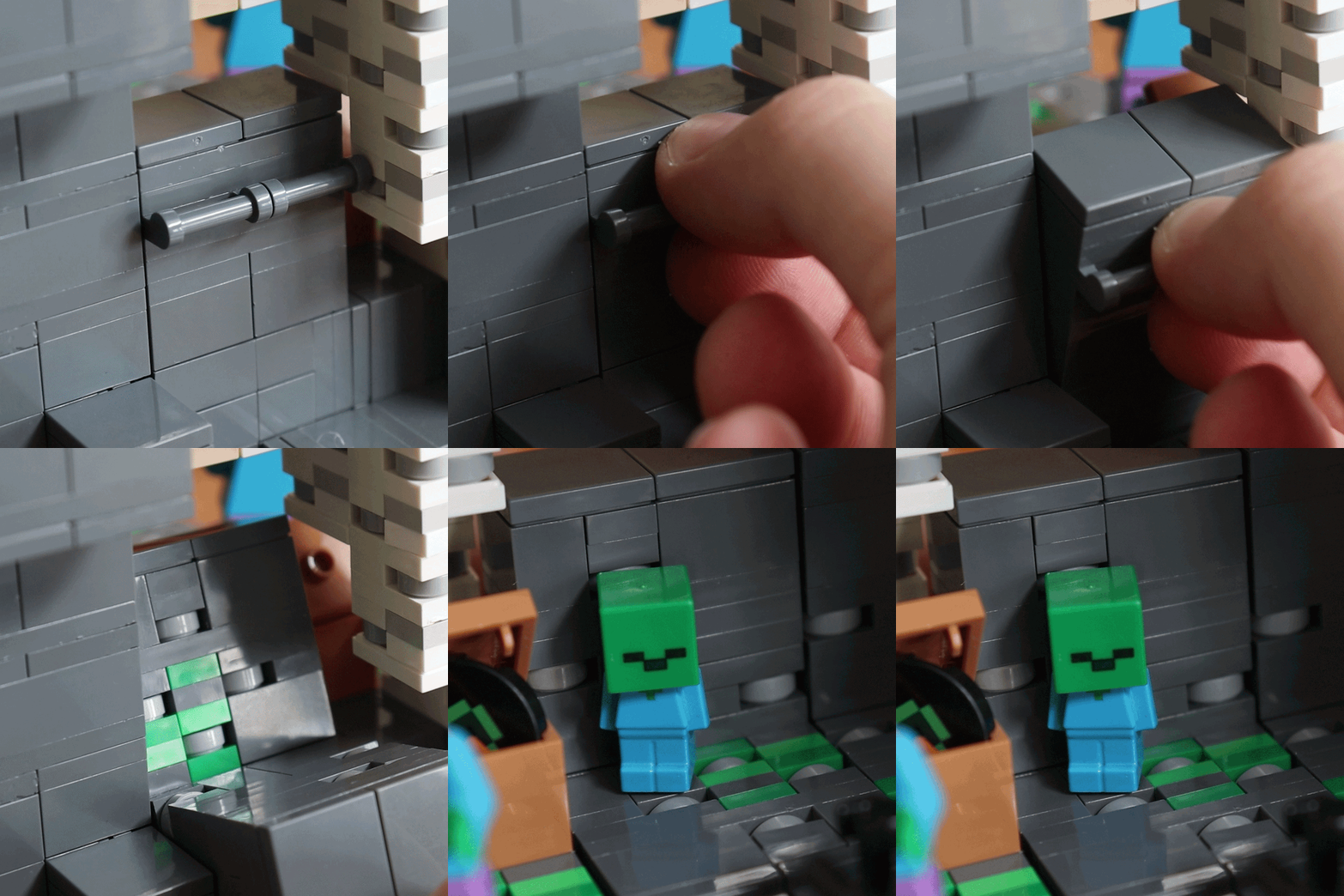
Making the zombie “spawn” into the scene felt essential, as both official sets included some version of this feature. Each approached it differently, but both made compromises I wasn't willing to accept. My spawning mechanism can be slightly fragile depending on how aggressively it's used, and friction at certain connection points can cause minor resistance. However, considering I designed it entirely in Studio without physically testing it until final assembly, I'm extremely happy with how it turned out. Keeping the floor and wall textures consistent regardless of whether the baby zombie is deployed was a detail I'm especially proud of.
This final play feature wasn't included in either official set, and as far as I'm aware, hasn't appeared in any LEGO Minecraft set: a jumping slime. The mechanism uses a structure similar to the spawner knob, with a small liftarm pushing a loose Technic axle upward. It's a simple solution, but the motion feels lively, and honestly, it's just really fun.
While designing the play features was challenging, building the terrain itself proved even more demanding. From extensive SNOT techniques to creating convincing block textures while maintaining stability and legality, the model required constant problem-solving. I also took creative liberties compared to the official sets. For the first time, I experimented with texturing Minecraft's stone variants: Diorite, Granite, and Andesite. Granite would ideally use the discontinued Sand Red color, but due to its scarcity and cost, I decided against including it. Andesite uses a mix of Light Gray and Light Bluish Gray, while Diorite incorporates Very Light Bluish Gray, a color I wish LEGO used more often. I also included an acacia tree, as the newer Zombie Dungeon set suggests a biome transition between desert and savannah.
A link to the instructions can be found
here.
You can find the parts list (.xml)
here.
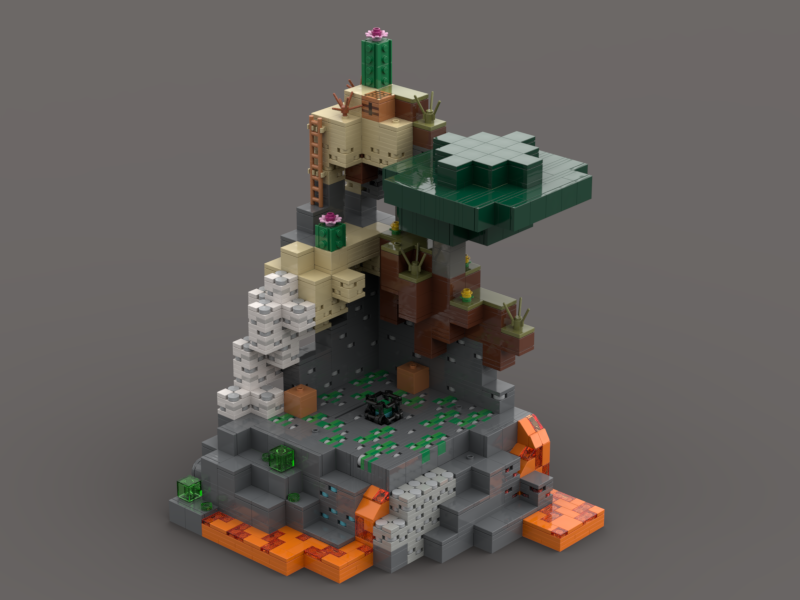
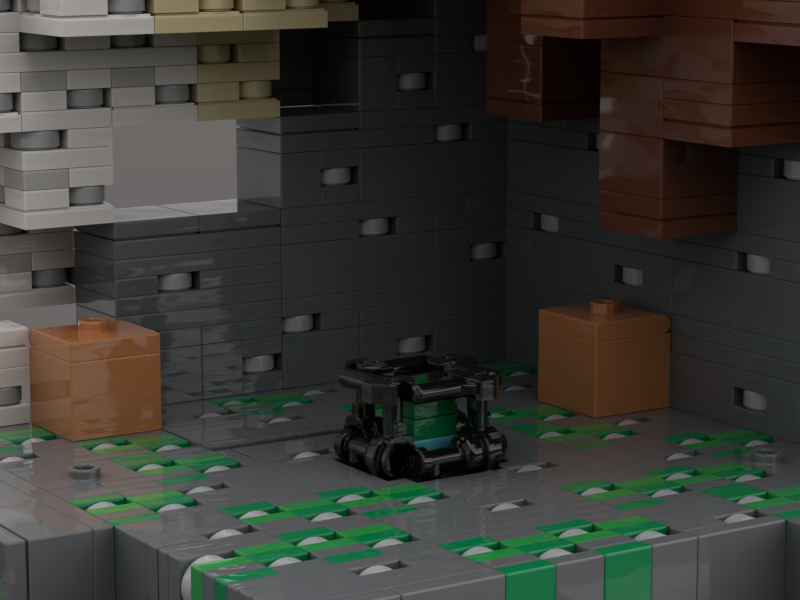
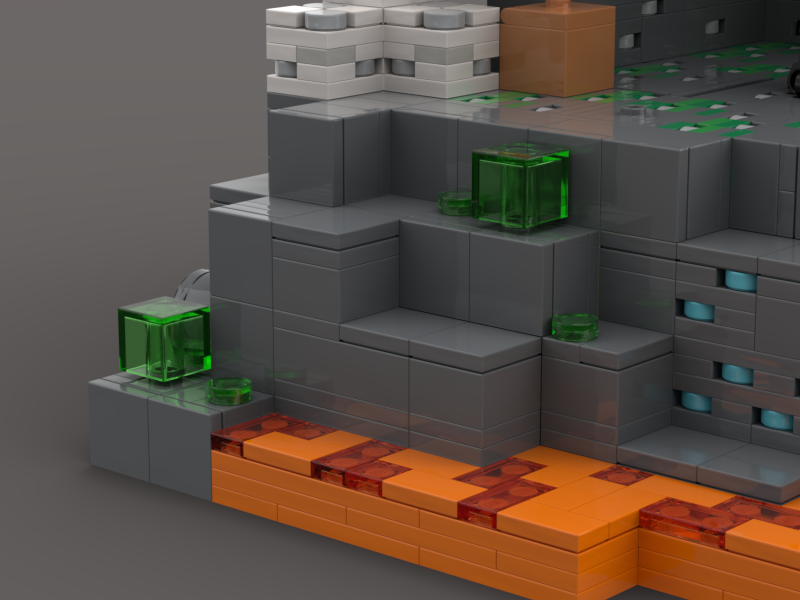
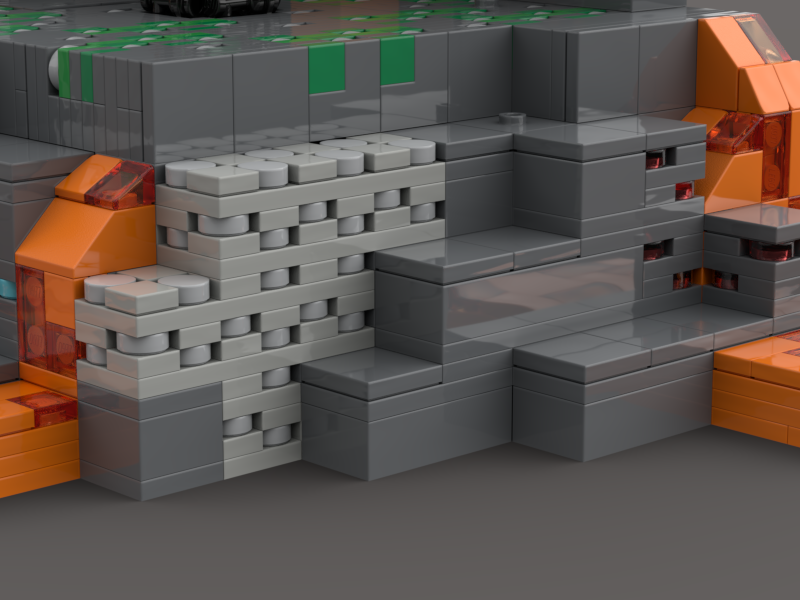
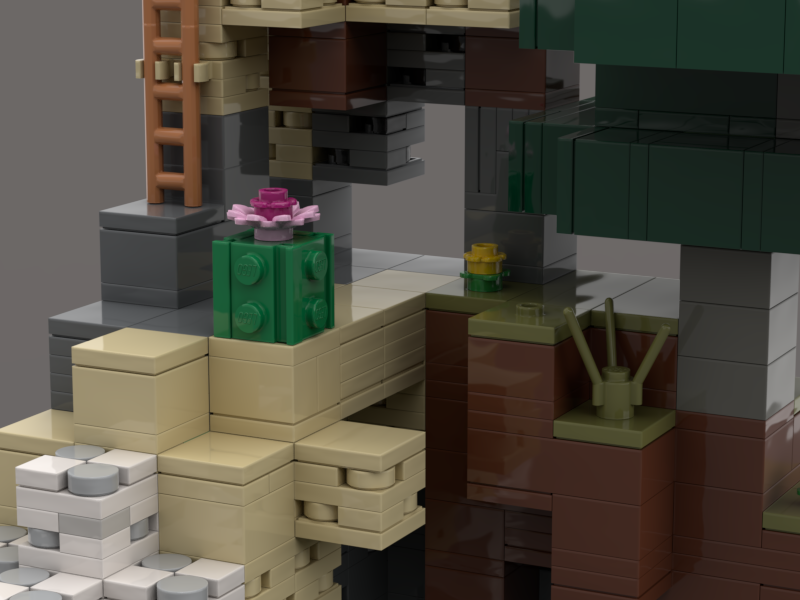
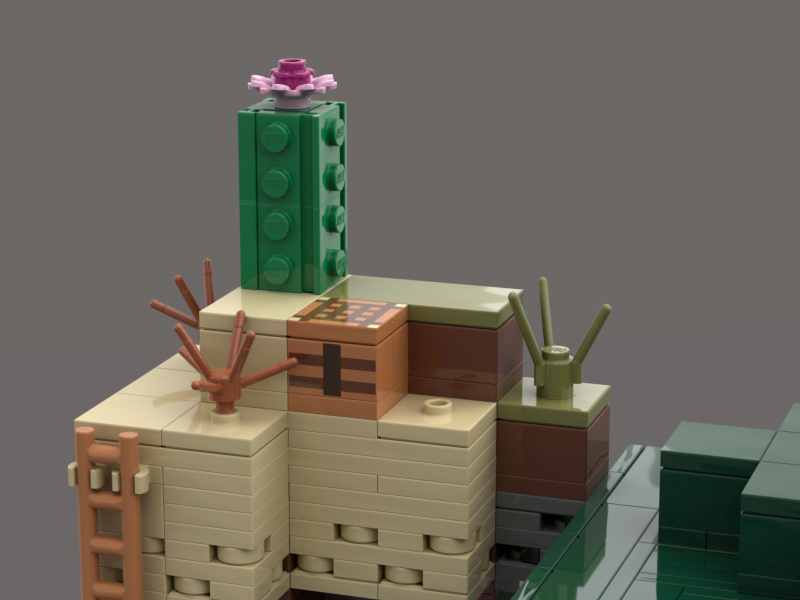
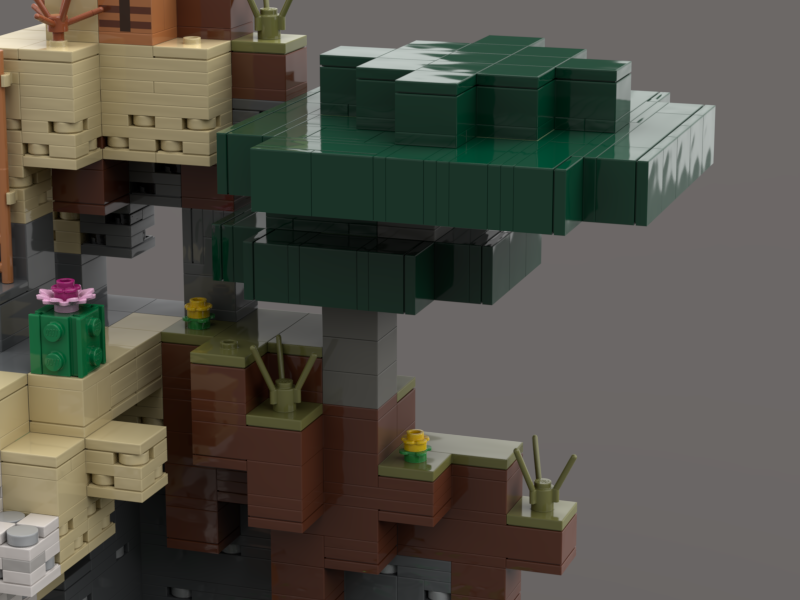
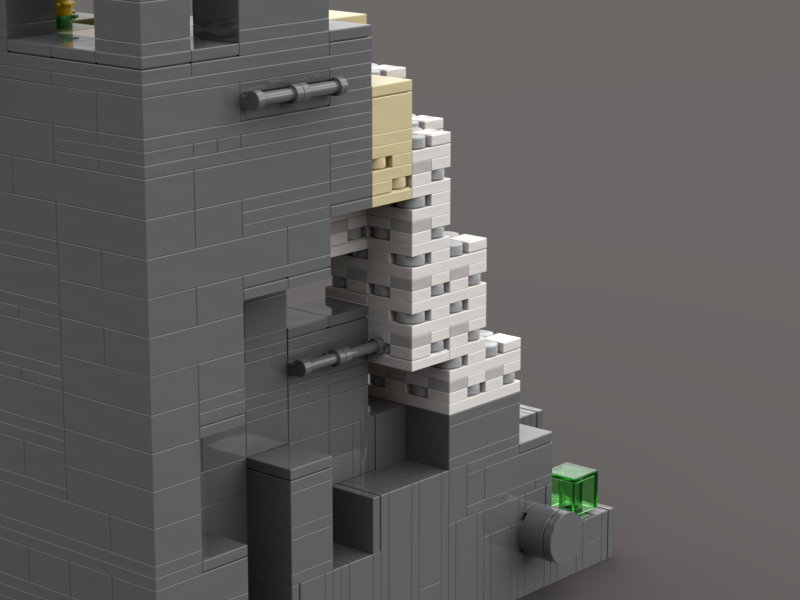
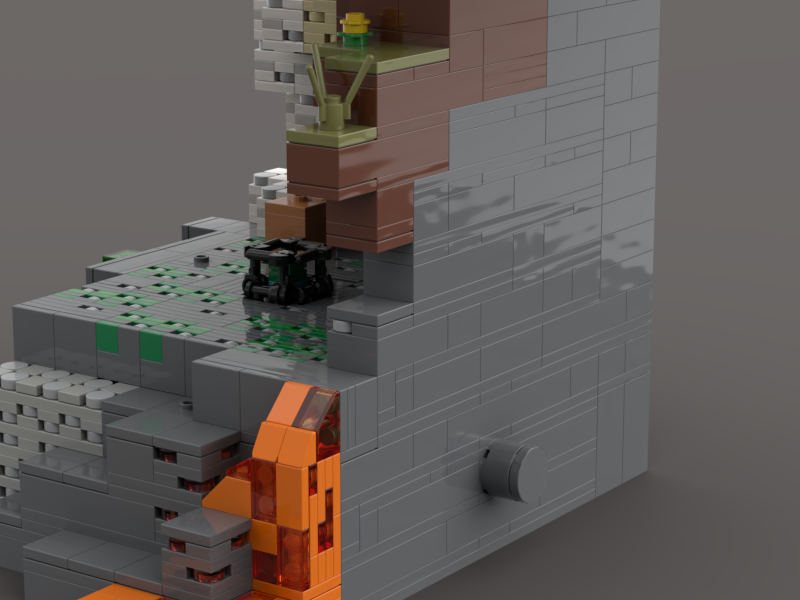
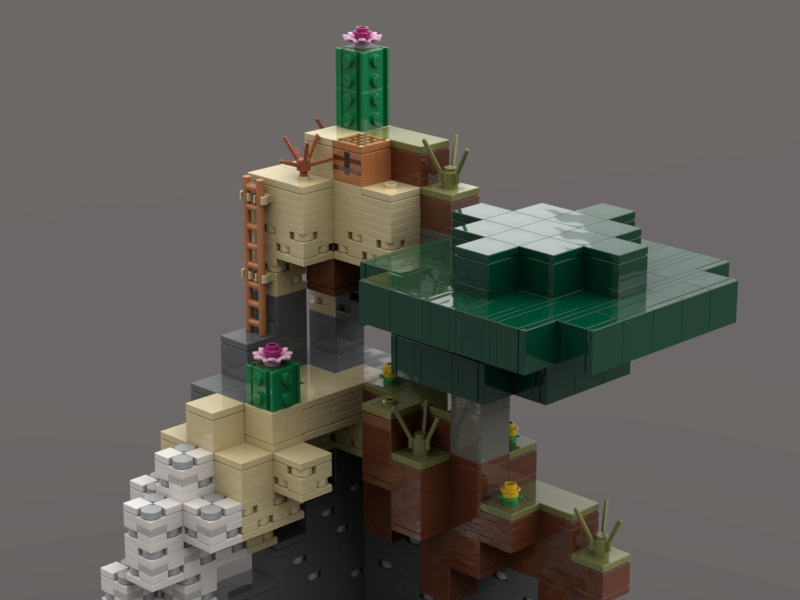
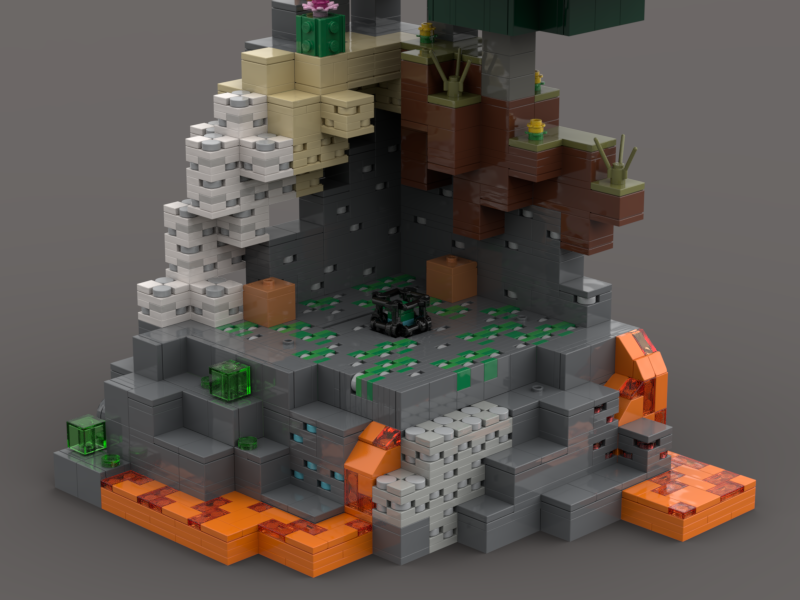
When it came to showcasing the play features, I didn't think photos would do them justice. While I originally planned to record simple demonstrations, I decided instead to film a video around the project. The video highlights my building process and compares this model to the two official versions, with a particular focus on the newer set that inspired the project in the first place. I've been intentionally pushing myself to improve across different creative mediums, from mechanical design to filmmaking, and this project represents meaningful growth compared to my earlier work.